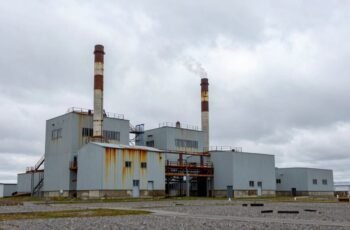
Consider a rural community relying on diesel generators for power, emitting high levels of NOx, CO, and CO₂, which contribute to local air pollution and climate change. While these generators offer immediate, reliable energy, their environmental footprint is significant. As we compare this with solar power, which produces minimal lifecycle emissions, it prompts us to question whether cleaner alternatives can meet our energy needs effectively and sustainably—an issue worth exploring in detail.
Key Takeaways
- Generators emit higher levels of CO₂, NOx, CO, and particulate matter compared to solar power’s near-zero operational emissions.
- Lifecycle emissions for solar are approximately 0.04 kg per kWh, significantly lower than diesel generators’ emissions per liter burned.
- Solar power reduces air pollution, improving public health and decreasing respiratory illnesses linked to generator emissions.
- While generators rely on fossil fuels, solar energy depends on abundant, renewable sunlight with minimal environmental impact.
- Transitioning to solar lowers overall greenhouse gas footprint and supports sustainable, cleaner energy systems.
How Do Generator Emissions Impact the Environment?
Although generators provide essential power in many settings, their emissions considerably harm the environment. Combustion of fossil fuels releases pollutants such as nitrogen oxides (NOx), carbon monoxide (CO), particulate matter, and unburned hydrocarbons, which contribute to air quality deterioration. Additionally, generator emissions notably increase greenhouse gases, particularly carbon dioxide (CO2), intensifying global warming. These emissions can lead to smog formation, acid rain, and respiratory health issues in nearby populations. The combustion process is inherently inefficient, often resulting in incomplete fuel oxidation and higher pollutant output. Furthermore, the lifecycle emissions—including fuel extraction, transportation, and maintenance—compound the environmental footprint. Overall, generator emissions pose substantial ecological risks, emphasizing the need for cleaner, more sustainable energy alternatives.
Comparing Carbon Footprints: Generators vs Solar Power
When evaluating the environmental impact of energy sources, carbon footprint emerges as a key metric for comparison. Generators, especially those powered by fossil fuels, produce significant greenhouse gas emissions—primarily CO₂—during operation. Lifecycle assessments show that emissions stem from fuel extraction, transportation, and combustion. In contrast, solar power systems have minimal operational emissions; they generate electricity without direct CO₂ release. Although manufacturing and installation of solar panels involve some embodied energy and emissions, these are offset within a few years of operation. Quantitatively, a typical diesel generator emits around 2.68 kg of CO₂ per liter of fuel burned, while solar power’s lifecycle emissions are approximately 0.04 kg per kWh. This stark difference underscores solar power’s superior environmental footprint over traditional generators, especially over long-term use.
Cost Considerations: Upfront Investment and Long-Term Savings
While the initial investment for solar power systems can be higher than that of traditional generators, analyzing the long-term financial implications reveals significant savings. Solar installations typically involve upfront costs for panels, inverters, and installation labor, which can be substantial. However, these costs are offset over time through reduced operational expenses, particularly eliminating fuel and maintenance costs associated with generators. Additionally, solar power systems often qualify for financial incentives, such as tax credits and rebates, which further decrease initial expenditure. Over a system’s lifespan—often 25 years—solar energy can result in substantial cost reductions per kilowatt-hour compared to generator fuel costs. This long-term perspective demonstrates that, despite higher initial outlays, solar power provides a more predictable and potentially lower total cost of ownership.
Practicality and Reliability of Generators and Solar Power
Generators have long been relied upon for their straightforward applicability and immediate power output, making them a practical choice in many settings. Their reliability stems from mature technology, ease of deployment, and consistent performance under various loads. However, their dependability can diminish over time due to wear, fuel quality, and maintenance issues. Conversely, solar power offers a sustainable alternative, but its practicality depends on factors such as solar irradiance, storage capacity, and grid integration. To evaluate their reliability:
- Generators provide predictable power regardless of weather, but require regular maintenance.
- Solar systems depend heavily on sunlight availability, making backup solutions essential.
- Both systems demand operational oversight; generators need fuel supply, while solar needs system monitoring and efficient energy management.
Understanding these technical nuances helps determine their practical reliability in real-world applications.
How Do Maintenance and Operation Affect Environmental Impact?
Maintenance frequency directly influences generator emissions, as irregular servicing can lead to inefficient combustion and higher pollutant output. Operational efficiency impacts the overall environmental footprint, with optimized systems reducing fuel consumption and emissions. Analyzing these factors helps us understand how ongoing maintenance and operational practices shape the comparative sustainability of generators and solar power.
Maintenance Frequency and Emissions
Regular maintenance and operational practices considerably influence the environmental footprint of generator systems. Frequent maintenance reduces emissions by ensuring ideal combustion efficiency, minimizing unburned fuel, and preventing component degradation. Conversely, infrequent maintenance can lead to increased emissions due to carbon buildup and worn-out parts. Specifically:
- Fuel efficiency degradation: Poorly maintained generators consume more fuel, increasing greenhouse gas emissions.
- Emission control system failure: Neglected systems like catalytic converters or filters become less effective, releasing pollutants.
- Mechanical wear and tear: Worn components elevate the likelihood of leaks and incomplete combustion, further raising emissions.
Thus, consistent maintenance not only preserves operational reliability but also considerably curtails environmental impact by maintaining emission standards and fuel efficiency.
Operational Efficiency and Environmental Footprint
Operational efficiency directly influences the environmental footprint of power generation systems by determining fuel consumption and pollutant emissions. Higher efficiency means more electricity is generated per unit of fuel, reducing overall emissions of CO₂, NOₓ, and particulate matter. Maintenance practices that optimize operational parameters—such as timely component replacement and system tuning—minimize internal losses and prevent efficiency degradation. Conversely, neglecting routine operation reduces system performance, increases fuel use, and elevates pollutant outputs. In solar power, operational efficiency hinges on maximizing panel output through proper cleaning, orientation, and weather adaptation, which lessens the need for backup generators and their associated emissions. Therefore, maintaining operational efficiency is essential for lowering environmental impacts across both fossil-fuel and renewable energy systems.
Which Energy Source Is More Sustainable in the Long Run?
While both generator emissions and solar power serve as viable energy sources, solar energy emerges as the more sustainable option over the long term due to its minimal environmental impact and inexhaustible fuel supply. Solar power’s sustainability hinges on three key factors:
- Resource Availability: The sun provides a virtually limitless energy source, unlike fossil fuels, which are finite and depleting.
- Environmental Impact: Solar panels produce no direct emissions during operation, considerably reducing greenhouse gases.
- Lifecycle Durability: Advances in photovoltaic technology have increased panel lifespan and efficiency, making solar energy more economically and environmentally sustainable over decades.
These factors collectively affirm solar power’s long-term viability, positioning it as a future-proof energy solution compared to generator emissions.
The Health and Air Quality Benefits of Solar Power
The shift toward solar power not only reduces greenhouse gas emissions but also offers considerable health and air quality benefits. Unlike fossil fuel generators, solar panels produce electricity without emitting pollutants such as nitrogen oxides (NOx), sulfur dioxide (SO₂), or particulate matter (PM), which are linked to respiratory and cardiovascular diseases. This decline in airborne pollutants directly improves ambient air quality, especially in urban environments with high fossil fuel combustion. Studies demonstrate that regions adopting solar energy experience measurable decreases in respiratory illnesses and hospital admissions. Additionally, eliminating emissions from traditional generators reduces ground-level ozone formation, further benefiting public health. Overall, solar power’s clean energy profile substantially contributes to healthier communities by mitigating harmful air pollutants.
Can Solar Power Meet All Your Energy Needs?
While solar power offers significant environmental benefits, its ability to fully meet energy demands is constrained by storage limitations, weather variability, and the need for substantial infrastructure investments. Energy storage systems must be advanced enough to provide reliable supply during low sunlight periods, which remains technically challenging and costly. Additionally, expanding grid capacity and integrating intermittent solar generation require targeted infrastructure upgrades to guarantee consistent energy delivery.
Energy Storage Challenges
Can solar power truly meet all our energy needs, given the current limitations in energy storage? Energy storage remains a critical bottleneck, hindering the reliability of solar energy systems. The primary challenges include:
- Capacity Limitations: Current battery technologies, like lithium-ion, offer limited storage capacity relative to total energy demand, restricting the ability to store excess power during peak sunlight.
- Cost Barriers: High costs for large-scale storage systems impede widespread adoption, affecting economic viability.
- Efficiency Losses: Storage and retrieval processes incur energy losses, reducing overall system efficiency and complicating grid balancing.
Addressing these issues requires advancements in battery chemistry, scalable infrastructure, and cost-effective solutions. Until then, energy storage constraints pose a significant obstacle to fully relying on solar power for continuous energy needs.
Weather Dependency Limits
Despite advances in photovoltaic technology, weather variability remains a fundamental limitation to solar power’s ability to reliably meet all energy demands. Solar output is directly influenced by factors such as cloud cover, atmospheric conditions, and seasonal changes, which cause fluctuations in energy production. Cloudy days and reduced sunlight can decrease efficiency by up to 80%, creating intermittent supply issues. Additionally, geographic location impacts insolation levels, making some regions inherently less suitable for solar energy. While energy storage can mitigate short-term variability, it cannot eliminate the dependency on consistent sunlight. Consequently, relying solely on solar power poses challenges in maintaining grid stability and meeting continuous energy needs, especially in regions with variable weather patterns. This variability underscores the need for hybrid systems or complementary energy sources to ensure reliability.
Infrastructure Investment Needs
Achieving a fully sustainable energy system with solar power alone requires substantial infrastructure investments to address its inherent limitations. To guarantee reliability and scalability, we must focus on:
- Grid modernization—upgrading transmission lines and incorporating smart grid technologies to handle variable generation and distributed sources.
- Storage solutions—deploying large-scale batteries or other energy storage systems that can buffer intermittency and supply power during low sunlight periods.
- Interconnection capacity—expanding regional and national grids to facilitate energy sharing across diverse geographical zones, reducing reliance on localized generation.
These investments are essential to compensate for solar’s intermittency and variability, enabling a resilient, efficient energy system that can meet all demand reliably.
The Role of Technology in Reducing Generator Emissions
Advancements in technology have played a pivotal role in mitigating the emissions produced by generators, primarily through the development of cleaner combustion methods and emission control systems. Modern innovations include catalytic converters, advanced filtration, and optimized combustion processes, which markedly reduce pollutants like NOx, CO, and particulate matter. These systems improve efficiency and compliance with environmental standards, but limitations remain regarding residual emissions. The table below summarizes key technological solutions:
| Technology | Function | Impact on Emissions |
|---|---|---|
| Catalytic Converters | Convert harmful gases into less toxic substances | Reduces NOx and CO levels |
| Emission Sensors | Monitor real-time pollutant levels | Enable precise control |
| Exhaust Gas Recirculation | Lower combustion temperature | Decreases NOx formation |
| Filtration Systems | Capture particulate matter | Less particulate emissions |
| Combustion Optimization | Improve fuel efficiency and burn completeness | Lower overall emissions |
Making the Switch: Tips for Transitioning to Solar Power
Shifting to solar power requires careful planning and understanding of both technical and logistical considerations. To ensure a smooth transition, we recommend these steps:
- Conduct a comprehensive site assessment to evaluate sunlight exposure, shading, and roof integrity.
- Calculate energy needs accurately to select appropriately sized solar systems, avoiding over- or under-capacity.
- Review local policies and incentives to optimize financial benefits and streamline installation processes.
These steps are essential for maximizing efficiency and cost-effectiveness. Analyzing technical factors like system sizing and environmental conditions helps prevent future issues and supports long-term sustainability. By approaching the transition systematically, we can effectively reduce reliance on emissions-heavy generators while ensuring reliable, clean energy.
Frequently Asked Questions
How Do Generator Emissions Vary by Fuel Type?
We observe that generator emissions substantially depend on fuel type; diesel emits high levels of particulates and NOx, while natural gas produces fewer pollutants, and coal results in the highest carbon dioxide and particulate emissions among common fuels.
What Are the Seasonal Performance Differences Between Generators and Solar?
Ever wondered how seasons impact energy? We see generators perform consistently regardless of weather, but solar efficiency drops in winter due to shorter days and cloud cover, making seasonality a key factor in energy planning.
Are There Government Incentives for Adopting Solar Power?
Yes, government incentives like tax credits, rebates, and grants promote solar adoption. These programs, supported by policies such as the Investment Tax Credit (ITC), substantially reduce costs, accelerating renewable energy integration and lowering emissions.
How Do Maintenance Costs Compare Over Time for Both Options?
We find that solar power’s maintenance costs decrease over time due to minimal moving parts, averaging lower long-term expenses, whereas generators require ongoing fuel, oil, and filter replacements, making their maintenance more costly and labor-intensive over the lifespan.
Can Hybrid Systems Combine Generator and Solar Power Effectively?
Yes, hybrid systems effectively combine generator and solar power, optimizing energy use and reducing emissions. Don’t they demonstrate a strategic approach by leveraging solar’s sustainability and generator’s reliability, ultimately lowering operational costs and environmental impact?
Conclusion
Ultimately, embracing eco-friendly energy options empowers us to eliminate emissions, enhance air quality, and guarantee economic efficiency. By shifting from traditional generators to solar power, we harness a sustainable, scalable solution that supports societal health and environmental integrity. Strategic changes toward solar signify smarter, cleaner, future-proof energy choices, emphasizing environmental responsibility and economic resilience. Let’s lead with logic, leverage technology, and light the way toward a cleaner, greener, and more sustainable tomorrow.