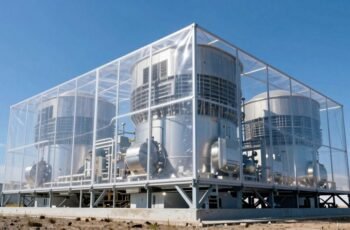
As professionals involved in energy systems, we recognize that effective power station storage is critical for grid stability and integrating renewable sources. Understanding the various technologies, their capabilities, and limitations enables us to optimize performance and cost-efficiency. Advances in storage solutions promise enhanced sustainability, but also pose complex challenges. Exploring these aspects thoroughly provides the foundation needed to navigate the evolving landscape of energy storage and its role in future power systems.
Key Takeaways
- Power station storage systems manage renewable energy, balancing supply and demand to ensure grid stability and reliability.
- Different technologies like batteries, pumped hydro, and thermal storage serve various capacity and response needs.
- Battery and pumped hydro storage provide rapid response for grid stability but face energy density and cost challenges.
- Emerging materials and innovations aim to improve storage efficiency, safety, capacity, and scalability for future energy needs.
- Storage systems support decarbonization by integrating clean energy, reducing reliance on fossil fuels, and enhancing grid resilience.
What Are Power Station Storage Systems and Why Do They Matter?
Power station storage systems are essential components that enable the effective management and utilization of generated electrical energy, particularly from intermittent renewable sources like wind and solar. They serve as critical buffers, balancing supply and demand by storing excess energy during periods of high generation and releasing it during peak consumption. These systems improve grid stability, reduce reliance on fossil fuels, and enhance overall operational efficiency. They incorporate advanced technologies such as batteries, pumped hydro, or thermal storage, each designed for specific performance metrics like response time, capacity, and lifespan. Precise control algorithms optimize charge-discharge cycles, ensuring reliability and longevity. Without these storage solutions, integrating variable renewable sources into the grid would be inefficient and unreliable, hindering the shift to sustainable energy systems.
Different Types of Energy Storage Technologies Used in Power Stations
Various energy storage technologies are employed in power stations to address different operational requirements, each with distinct advantages and limitations. Compressed air energy storage (CAES) uses underground caverns to store pressurized air, enabling large-scale, long-duration energy release but requiring suitable geology. Pumped hydroelectric storage employs two reservoirs at different elevations, providing high efficiency and proven reliability, yet it depends on geographic feasibility. Flywheel systems store kinetic energy in rapidly spinning rotors, offering rapid response and high cycle life, though they are limited in energy capacity. Thermal storage converts excess electricity into heat, suitable for integrating with combined heat and power systems but constrained by heat loss over time. Each technology’s suitability hinges on site-specific factors, capacity needs, and operational flexibility.
How Battery Storage Enhances Grid Stability and Reliability
Battery storage systems play a essential role in enhancing grid stability and reliability by providing rapid response to fluctuations in electricity demand and supply. They deliver immediate power injection during sudden drops in generation, preventing voltage dips and frequency deviations. Conversely, during excess generation, they absorb surplus energy, mitigating overloads and maintaining grid balance. Their fast response times—measured in milliseconds—are critical for stabilizing grid frequency and preventing cascading failures. Advanced battery management systems optimize charge/discharge cycles, extending lifespan and ensuring consistent performance. By smoothing out intermittent renewable sources like solar and wind, batteries reduce the need for fossil fuel backup, supporting cleaner energy integration. Overall, battery storage acts as a dynamic buffer, improving grid resilience and operational reliability under variable load conditions.
The Role of Pumped Hydro Storage in Large-Scale Power Grids
How does pumped hydro storage serve as a critical component in large-scale power grids? It provides a reliable, large-capacity method for balancing supply and demand, especially during peak periods or sudden fluctuations. Its ability to rapidly switch between generating and storing energy enhances grid stability and resilience. Pumped hydro achieves this by moving water between reservoirs at different elevations, effectively acting as a giant, reversible battery.
Key aspects include:
- High efficiency—typically 70-85%, enabling significant energy reuse.
- Fast response times—seconds to minutes, supporting grid frequency regulation.
- Large capacity—ranging from hundreds of megawatts to gigawatts, suitable for grid-scale buffering.
- Long operational lifespan—often exceeding 50 years, ensuring long-term sustainability.
Key Factors to Consider When Choosing a Storage Solution
When selecting an energy storage solution, it’s crucial to evaluate multiple technical and economic factors to guarantee peak performance and alignment with grid requirements. Key considerations include capacity, which determines how much energy can be stored and dispatched; response time, essential for grid stability during fluctuations; and cycle life, reflecting long-term durability and cost-effectiveness. We must also analyze efficiency losses during charge and discharge cycles to optimize operational costs. Economic factors like initial capital expenditure, operational and maintenance costs, and potential revenue streams influence decision-making. Compatibility with existing grid infrastructure, scalability, and environmental impact further shape our choice. A thorough assessment of these elements ensures our storage solution is reliable, cost-efficient, and capable of supporting grid stability and renewable integration.
Innovations and Future Trends in Power Station Storage
Advancements in battery chemistries, such as solid-state and flow batteries, are expanding the efficiency and safety of energy storage systems. Grid-scale solutions are increasingly leveraging large-scale, modular architectures to enhance flexibility and resilience. Additionally, emerging materials like lithium-silicon and graphene are poised to revolutionize storage capacity and longevity in future power stations.
Advanced Battery Technologies
Recent innovations in battery technology are transforming power station storage by substantially enhancing energy density, durability, and safety. Breakthroughs such as solid-state batteries replace liquid electrolytes with solid materials, reducing fire risk and increasing lifespan. Lithium-silicon anodes offer higher capacity compared to traditional graphite, boosting energy density. Multilayered electrode architectures improve charge-discharge efficiency and cycle stability, extending operational life. Additionally, the integration of nanomaterials, like graphene, enhances conductivity and structural integrity. These advancements aim to address current limitations by increasing energy retention, reducing degradation, and ensuring safer operation. As these technologies mature, they promise more reliable, scalable, and efficient storage solutions. The focus remains on optimizing material properties and manufacturing processes to meet the growing demands of modern power stations.
Grid-Scale Storage Solutions
How are emerging innovations shaping the future of grid-scale storage solutions? Advances in thermal, mechanical, and chemical energy storage are enhancing grid stability and capacity. Pumped hydro remains dominant due to its proven scalability, but novel approaches like compressed air energy storage (CAES) are gaining traction for their higher efficiency and reduced land footprint. Innovations in flow batteries, particularly vanadium and zinc-based systems, offer extended cycle life and rapid response times, making them suitable for grid balancing. Additionally, modular, grid-connected lithium-ion systems are improving in scalability and cost-effectiveness, driven by manufacturing advancements. These technologies emphasize increased energy density, longer lifespan, and faster deployment, aligning with the evolving demand for resilient, flexible, and sustainable grid infrastructure.
Emerging Storage Materials
What innovations in storage materials are shaping the next generation of power station solutions? Advances focus on enhancing energy density, durability, and cost-effectiveness. We see promising developments such as:
- Solid-state electrolytes—offering higher safety margins and increased stability compared to liquid electrolytes.
- Lithium-silicon anodes—delivering markedly greater capacity and longevity over traditional graphite anodes.
- Metal-air batteries—utilizing ambient oxygen to enable ultra-high energy densities for grid-scale applications.
- Flow battery materials—innovating with organic and metal-based compounds to improve scalability, lifespan, and environmental impact.
These emerging materials enable more efficient, safer, and sustainable storage solutions, pushing the boundaries of capacity and operational lifespan essential for future power grid resilience.
Challenges and Limitations of Current Storage Technologies
Current storage technologies face significant limitations in energy density, restricting the amount of power that can be stored within a given volume or weight. Additionally, high costs and scalability challenges hinder widespread deployment, especially for large-scale applications. Addressing these technical and economic constraints is essential for advancing reliable, cost-effective energy storage solutions.
Energy Density Constraints
While advancements in energy storage technologies have progressed considerably, limitations in energy density remain a critical challenge impeding their widespread deployment. The core issue lies in the physical and chemical constraints of current storage methods, which restrict the amount of energy stored per unit volume or weight. This constraint impacts operational efficiency and scalability. Specifically:
- Lithium-ion batteries typically offer 150-250 Wh/kg, limiting their use in large-scale applications.
- Pumped hydro storage is geographically constrained, with energy density around 0.01-0.05 Wh/m³.
- Flow batteries provide moderate energy densities (~20-50 Wh/L), but face complexity and cost issues.
- Solid-state batteries promise higher densities but face material stability challenges.
These limitations demand ongoing research to enhance energy density without compromising safety and longevity.
Cost and Scalability
Despite notable advancements in energy storage technologies, their widespread adoption remains hindered by high costs and limited scalability. Lithium-ion batteries, while prevalent, face economic constraints due to expensive raw materials and manufacturing complexities, which limit large-scale deployment. Pumped hydro storage offers high capacity but requires significant geographic and environmental prerequisites, restricting scalability. Emerging technologies like flow batteries show promise but are still costly and immature for extensive application. Economic viability often depends on balancing upfront investment against long-term operational savings, yet current cost trajectories remain prohibitive for broad implementation. Scalability challenges stem from material limitations, infrastructure requirements, and diminishing returns at larger scales. Overcoming these hurdles necessitates technological innovation, cost reduction strategies, and infrastructure development to enable flexible, affordable, and expansive energy storage solutions.
How Power Station Storage Contributes to a Sustainable Energy Future
Power station storage plays a critical role in advancing a sustainable energy future by enabling more efficient integration of renewable sources into the grid. It stabilizes supply fluctuations, mitigates intermittency, and assures consistent energy delivery. This enhances grid reliability and reduces dependence on fossil fuels. Key contributions include:
Power station storage ensures reliable, stable energy delivery and supports a sustainable, renewable-powered grid.
- Load Balancing: Storage systems absorb excess energy during peak production, then release it during low-generation periods, optimizing grid performance.
- Renewable Integration: They facilitate the incorporation of variable sources like wind and solar, reducing curtailment and increasing renewable penetration.
- Grid Stability: Storage provides frequency regulation and voltage support, maintaining grid stability during demand fluctuations.
- Decarbonization Support: By storing clean energy, storage systems decrease overall carbon emissions and promote sustainable practices in power generation.
Frequently Asked Questions
What Are the Safety Concerns Associated With Power Station Storage Systems?
We recognize that safety concerns include thermal runaway risks, electrical faults, and potential chemical leaks. Proper insulation, robust monitoring systems, and strict maintenance protocols are essential to prevent accidents and guarantee safe, reliable power station storage operations.
How Do Storage Systems Impact the Overall Cost of Power Generation?
Storage systems act as financial anchors, stabilizing supply costs and enabling peak shaving. They reduce operational expenses, mitigate fuel price volatility, and improve grid efficiency, ultimately lowering overall power generation costs while supporting reliable, flexible energy delivery.
Are There Environmental Risks Linked to Different Storage Technologies?
Environmental risks vary by storage technology; lithium-ion batteries pose fire and toxicity concerns, while pumped hydro risks include habitat disruption. We carefully analyze these impacts to minimize ecological damage and guarantee sustainable energy storage solutions.
How Does Storage Capacity Affect Power Station Operational Flexibility?
Higher storage capacity enhances operational flexibility by enabling power stations to balance supply and demand more effectively, as seen in large-scale grid storage projects, which allow for rapid response during peak loads and renewable energy fluctuations.
What Maintenance Challenges Do Storage Systems Typically Face?
Storage systems often face challenges like battery degradation, thermal management, and inverter failures. We monitor these issues closely, perform regular maintenance, and upgrade components to guarantee peak performance and longevity, minimizing operational disruptions and safety risks.
Conclusion
In conclusion, integrating advanced storage solutions is essential for enhancing grid stability and supporting renewable energy. With batteries accounting for over 50% of new storage deployments globally, the importance of innovation and scalability cannot be overstated. As we continue refining these technologies, we move closer to a resilient, sustainable energy future. Embracing these advancements guarantees reliable power delivery while minimizing environmental impact, ultimately transforming our energy landscape into a more efficient and sustainable system.