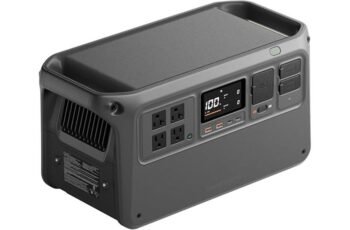
We’re evaluating the AFERIY 3840Wh portable power station as a high-capacity option for outages, camping, and mobile work. Its 3,600W output, expandable LFP battery, and under-10ms UPS response compare favorably with smaller backup units, while its size and expansion costs may offset those advantages. We’ll examine its charging options, runtime, controls, and trade-offs to see where this system fits—and where a lighter, less expensive model may make more sense.
Key Takeaways
- The AFERIY stores 3,840Wh and delivers 3,600W continuously, with 7,200W peak output for demanding devices.
- Its 15 ports, app controls, and under-10-millisecond UPS transfer support versatile use and backup.
- AC, solar, vehicle, or combined charging options are available; supported fast charging takes about 1.5 hours.
- Expansion packs raise capacity to 11.5kWh, but add cost and bulk; the station itself is large and heavy.
- It suits home outages, camping, and mobile work needing substantial power, but is less practical for lightweight travel.
3840Wh LFP Capacity
The AFERIY’s 3,840Wh LiFePO4 battery provides substantial stored energy for backup power, camping, or mobile work. Compared with smaller portable stations, this capacity can support more devices or extend operating time between recharges. Its LFP chemistry is designed for stable, durable energy storage, making it suitable for repeated use across home and outdoor settings. We can also increase total storage through capacity expansion: additional battery packs raise the system’s capacity to 11.5kWh. That option lets us scale available energy to match longer outages or heavier demands, rather than replacing the core station. Capacity alone doesn’t determine runtime; connected loads matter.
Detailed features
Beyond its expandable capacity, the AFERIY combines 3,600W of continuous output, 7,200W peak power, and 15 ports to support a broad range of devices. Its port selection includes AC outlets, USB-A, USB-C PD 3.0, DC5521/DC, XT60, and a 12V car socket, giving us more connection options than a basic power station. App control lets us monitor charge and discharge, check battery level, schedule operation, adjust light modes, and shut the unit down remotely. A built-in UPS switches in under 10 milliseconds, supporting sensitive equipment during outages. We can recharge through AC, solar, vehicle power, or combined AC and solar.
Pros and Cons
We’ll compare the AFERIY’s 3,840Wh capacity, expandable design, fast charging, and UPS function with its practical limitations. This balance will help you judge whether its output and features suit your backup or portable-power needs. We’ll start with the main advantages, then consider the trade-offs.
Pros
Although the AFERIY’s 3840Wh LiFePO4 battery is heavier-duty than typical portable power stations, its 3600W continuous output, 7200W peak, and expansion to 11.5kWh make it a strong option for extended backup. We can run household essentials, including a refrigerator, router, and lights, with reported runtimes reaching about 17 hours for basic loads. Four charging methods—AC, solar, vehicle, or combined AC and solar—add flexibility, while supported fast charging can refill it in 1.5 hours. Its UPS transfer under 10ms, 15-port selection, app controls, Quiet operation, and pull handle support dependable use and rugged portability at home or outdoors.
Cons
The AFERIY’s 3840Wh capacity and 11.5kWh expansion potential come with a substantial size and weight, which limit portability compared with smaller power stations. Its pull handle helps, but heavy portability remains a drawback for frequent lifting or travel. The High upfront cost may also exceed budgets when buyers don’t need its large capacity or 3600W output.
| Drawback | Practical impact |
|---|---|
| Large battery | Harder to transport |
| Expansion packs | Add cost and bulk |
| 1.5-hour recharge | Requires supported conditions |
We’d compare the price and weight with smaller units before choosing it. For stationary backup, these trade-offs matter less; for lightweight camping, they’re more significant.
Concluding thoughts
For users who need substantial backup capacity, the AFERIY’s 3,840Wh LiFePO4 battery, 3,600W output, and expansion to 11.5kWh make it a capable option for outages, camping, and mobile work. Compared with smaller power stations, it can support household essentials longer and run higher-demand equipment, though its size may limit portability. We’d consider its UPS transfer, 15 ports, app controls, and four charging methods useful for varied setups. The ideal users need extended backup or off-grid power and can accommodate its bulk. Adjustable charging and seven-year support add practical long term value, while the UL listing offers an additional safety assurance.
Frequently Asked Questions
Can the AFERIY Power Station Be Taken on an Airplane?
No, we can’t take this 3,840Wh power station on passenger flights. Airline battery restrictions generally limit lithium batteries to 100Wh, with exceptions requiring approval; checked baggage rules prohibit large spare batteries. Contact your airline before travel.
How Should the Unit Be Stored When Not in Use?
Store the unit in a cool, dry place; its 3,840Wh capacity makes proper Storage conditions important. For Battery maintenance, we’d follow the manual’s charge-level guidance, check it periodically, and avoid prolonged storage while fully depleted.
Does the Power Station Work While Charging?
Yes, we can use the power station during charging; this is pass through charging, enabling simultaneous operation. Unlike waiting for recharge to finish, we can keep supported devices powered, though charging speed may vary.
What Should I Do if the Unit Displays an Error Code?
Treat an error code as a dashboard warning: Check Error Codes in the manual, then compare the message with listed causes. If it persists, we’d stop using the unit and Contact Support for guidance.
Is Professional Installation Required for Home Backup?
Professional installation isn’t always required for plug-in backup, but we should hire a licensed electrician for transfer switch requirements or hardwired circuits. We must prioritize circuit safety and follow local codes; this station includes UPS functionality.
Conclusion
We find the AFERIY 3840Wh best suited to extended outages, demanding mobile work, and camps where capacity matters more than easy transport. Its 3,600W output, expandable storage, and fast charging offer more flexibility than smaller stations, while its UPS function adds practical backup protection. We wouldn’t overlook its bulk or the cost of expansion; lighter users may get better value elsewhere. But if you need substantial, quiet power in one system, those trade-offs are defensible.