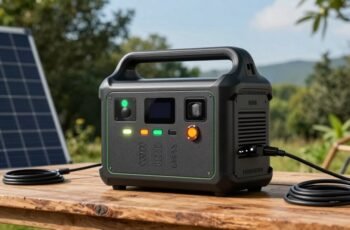
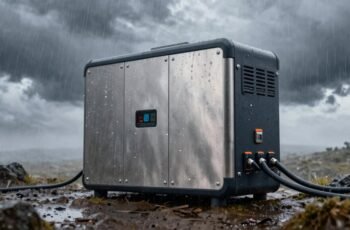
Many might not realize that connected solar generators leverage IoT technology to create a dynamic energy management system, enabling real-time data collection and remote operation. This integration allows for more precise control over solar energy collection, storage, and distribution, enhancing efficiency and reliability. As these systems grow more sophisticated, they offer scalable solutions tailored to diverse needs. Understanding their capabilities and limitations is essential to fully grasp how they can transform sustainable energy use—so, let’s explore what makes these systems a significant advancement.
Key Takeaways
- Connected solar generators integrate multiple units for efficient energy collection, storage, and management via IoT-enabled systems.
- They enable remote monitoring, real-time performance tracking, and centralized control for optimal system operation.
- Modular design allows easy scalability, expandability, and portable solutions for various energy needs.
- Advanced connectivity options like Wi-Fi and Zigbee facilitate seamless device integration and system management.
- Future trends include AI-driven predictive maintenance, enhanced smart home integration, and real-time data analytics.
What Are Connected Solar Generators and How Do They Work?
Connected solar generators are integrated energy systems that combine multiple units to function as a cohesive power source. They utilize a network of interconnected modules, often comprising solar panels, batteries, inverters, and control units, that communicate and coordinate operation. Through a central management system, these units optimize energy collection, storage, and distribution, enhancing overall efficiency. The system dynamically balances load demands and manages power flow, enabling seamless scalability and redundancy. By sharing energy resources, connected solar generators reduce individual component stress and improve reliability. The integration depends on advanced communication protocols and control algorithms that ensure synchronized operation, real-time monitoring, and fault detection. This interconnected architecture transforms isolated solar units into a unified, resilient energy network capable of meeting variable power needs with precision.
Key Features of Modern Connected Solar Generators
Modern connected solar generators feature advanced remote monitoring capabilities, enabling real-time performance tracking and system diagnostics. They seamlessly integrate with smart devices, allowing for centralized control and automation within smart home ecosystems. These features enhance operational efficiency and user convenience, making them essential for optimized energy management.
Remote Monitoring Capabilities
Remote monitoring capabilities have become a crucial feature of advanced solar generators, enabling users to oversee system performance in real-time from anywhere. These systems utilize integrated sensors and IoT technology to collect data on voltage, current, power output, and system health continuously. This data is transmitted securely to cloud-based platforms, allowing users to analyze performance metrics through dedicated apps or web interfaces. The real-time feedback facilitates proactive maintenance, quick fault detection, and efficiency optimization, minimizing downtime. Additionally, remote monitoring supports detailed historical analysis, aiding in predictive maintenance and system improvements. These capabilities enhance operational transparency, reduce the need for on-site inspections, and empower users with actionable insights, making system management more efficient and responsive.
Integration With Smart Devices
Integrating solar generators with smart devices enhances system functionality by enabling seamless communication and control across various platforms. This integration leverages IoT connectivity, allowing real-time data exchange between the generator and user interfaces such as smartphones, tablets, or home automation systems. Through dedicated apps or APIs, users can monitor performance metrics, adjust settings, and receive alerts remotely. This connectivity facilitates predictive maintenance, improves energy management, and optimizes efficiency by analyzing usage patterns. additionally, smart device integration enables automation features, such as scheduling and load balancing, which adapt to user preferences or grid demands. By embedding these capabilities, modern connected solar generators deliver not only greater operational transparency but also enhanced adaptability within intelligent energy ecosystems.
How to Choose the Best Connected Solar Generator for Your Needs
Selecting the most suitable connected solar generator requires a clear understanding of your energy demands and operational environment. We begin by evaluating your power requirements—consider peak loads, continuous consumption, and future scalability. Next, evaluate the generator’s capacity, ensuring it can support your essential devices without overprovisioning, which can increase costs unnecessarily. Connectivity features, such as remote monitoring and integration capabilities, should align with your existing smart infrastructure. Additionally, analyze the system’s efficiency, inverter quality, and battery management to optimize longevity and performance. Environmental factors, like climate and shading, influence panel placement and system resilience. Finally, consider maintenance needs, warranty coverage, and scalability options to ensure your setup remains adaptable and reliable over time. This systematic approach ensures an informed, purpose-driven selection.
Benefits of Using Connected Solar Generators for Home Power
Connected solar generators enable precise energy management, allowing us to optimize power usage and storage based on real-time data. They also facilitate seamless integration with existing home systems, enhancing overall efficiency. This interconnected approach supports smarter, more reliable home energy solutions.
Enhanced Energy Management
By enabling real-time monitoring and control, connected solar generators markedly enhance energy management within a home. This connectivity allows for precise data collection on energy production, consumption patterns, and system performance, facilitating informed decision-making. Automated controls optimize energy flow, prioritizing solar usage and reducing reliance on grid power during peak production times. Advanced algorithms analyze these data streams to identify inefficiencies and predict maintenance needs, minimizing downtime. Additionally, user interfaces provide granular visibility into energy metrics, empowering homeowners to adjust usage habits proactively. Overall, this integration results in improved system efficiency, cost savings, and a more sustainable energy footprint. Enhanced management capabilities transform passive energy systems into dynamic, intelligent networks that adapt to fluctuating conditions, ensuring best performance and resource utilization.
Seamless System Integration
Integrating solar generators into a home’s energy system creates a unified platform that maximizes efficiency and simplifies management. Connected systems enable real-time data sharing and remote control, reducing manual oversight and optimizing performance. By leveraging intelligent communication protocols, generators can coordinate with inverters and batteries, ensuring seamless power flow and load balancing. This integration minimizes energy losses and enhances system responsiveness during fluctuations in demand or sunlight conditions. Moreover, centralized control dashboards provide extensive visibility into system status, facilitating proactive maintenance and troubleshooting. The technical synergy achieved through seamless integration improves reliability and allows for scalable expansion, accommodating future energy needs or additional renewable sources. Overall, this interconnected approach results in a resilient, efficient, and easily manageable home energy ecosystem.
Portable Connected Solar Generators for Outdoor Adventures
As outdoor enthusiasts increasingly rely on portable power solutions, connected solar generators offer a versatile and efficient way to meet energy needs in remote environments. These units leverage modular design and smart connectivity, enabling real-time monitoring and dynamic power management. Their lightweight construction facilitates easy transport, while integrated batteries ensure consistent energy supply despite variable sunlight. Key features include:
- Expandable capacity through multiple panels and batteries
- Wireless communication for remote diagnostics
- Automated system optimization based on environmental data
- Compatibility with various device outputs and charging standards
This technical integration enhances reliability, reduces downtime, and maximizes energy harvesting efficiency. Such systems are ideal for extended outdoor adventures where maintaining power independence is critical, providing a scalable, resilient solution tailored to evolving energy demands.
Integrating Connected Solar Generators With Smart Home Systems
Integrating connected solar generators with smart home systems enables seamless device communication, maximizing overall energy efficiency. This integration facilitates advanced energy management by automating power distribution based on consumption patterns and generation capacity. Additionally, remote system monitoring provides real-time insights, ensuring peak performance and swift issue detection.
Seamless Device Integration
Connecting solar generators to smart home systems transforms energy management into a streamlined, automated process. This integration hinges on standardized protocols and open APIs, which enable consistent communication between devices. Ensuring compatibility involves validating firmware updates and supporting multiple communication interfaces, such as Wi-Fi, Zigbee, or Z-Wave. Key considerations include:
- Synchronizing data formats for real-time monitoring
- Implementing secure authentication and encryption methods
- Configuring centralized control dashboards
- Facilitating remote firmware updates for compatibility
Enhanced Energy Management
By leveraging smart home systems, we can considerably enhance energy management through connected solar generators, enabling precise control and optimization of renewable energy usage. Integration allows real-time data exchange, enabling automated load balancing and demand response. This synergy improves efficiency by prioritizing solar consumption during peak generation and shifting loads accordingly.
| Feature | Benefit | Technical Note |
|---|---|---|
| Automated Load Shifting | Reduces grid dependency | Logic algorithms optimize energy flow |
| Real-Time Data | Precise system adjustments | Continuous monitoring improves performance |
| Usage Analytics | Informs consumption patterns | Data-driven decision-making |
This approach maximizes renewable utilization, minimizes waste, and enhances overall system resilience.
Remote System Monitoring
Remote system monitoring plays a critical role in optimizing the performance and reliability of connected solar generators within smart home ecosystems. It enables real-time data collection, facilitating quick detection of issues like inefficiencies or system faults. Through integrated dashboards, we gain insights into energy production, consumption patterns, and system health, allowing proactive maintenance. Key features include:
- Continuous performance tracking to identify underperforming units
- Automated alerts for system anomalies or failures
- Data analysis for optimizing energy usage and storage
- Remote firmware updates to guarantee system security and efficiency
Monitoring and Managing Your Connected Solar Generator Remotely
Advancements in digital technology have made it possible to efficiently monitor and manage your connected solar generator from anywhere. Using integrated apps and cloud-based platforms, you can track real-time performance metrics, diagnose issues, and optimize energy flow remotely. These systems rely on IoT sensors and data analytics to provide actionable insights, ensuring maximum efficiency and system longevity. The following table summarizes essential remote management features:
| Feature | Functionality | Benefits |
|---|---|---|
| Real-time monitoring | Continuous data collection | Immediate issue detection |
| Remote control | Adjust settings via app | Flexibility and convenience |
| Predictive maintenance | Data-driven fault prediction | Reduced downtime |
| Data analytics | Performance trend analysis | Enhanced system optimization |
Scalability and Expandability of Connected Solar Power Systems
As the demand for renewable energy grows, the scalability and expandability of connected solar power systems become critical factors in designing adaptable energy solutions. These systems must accommodate evolving energy needs without significant overhaul. To guarantee effective scalability, key considerations include:
Scalable solar systems must adapt easily to changing energy needs with modular, compatible, and flexible components.
- Modular design that allows seamless addition of panels or batteries
- Compatibility with various inverter and controller technologies
- Robust communication protocols for integrating new units
- Infrastructure flexibility to support increased power flow
Evaluating these factors helps optimize system performance and future-proof investments. Scalability depends on thoughtful component selection and system architecture, enabling expansion while maintaining efficiency. Expandability also involves strategic planning for grid integration and energy storage, ensuring the system adapts to changing energy demands. Overall, a well-designed scalable and expandable system provides long-term reliability and operational flexibility.
Common Challenges and How to Troubleshoot Connected Solar Generators
Connected solar generators can face a range of challenges that hinder ideal performance, from connectivity issues to system malfunctions. Connectivity problems often stem from weak Wi-Fi signals, incompatible firmware, or interference, which disrupt data transmission and remote monitoring. Troubleshooting begins with verifying network strength, resetting routers, and updating firmware to guarantee compatibility. System malfunctions, such as inverter failures or faulty wiring, require detailed diagnostic checks—testing voltage levels, inspecting connections, and monitoring error codes. Software glitches can also cause operational delays; these are addressed through system resets or software updates. Regular maintenance, including cleaning panels and inspecting physical components, is essential for early problem detection. A systematic approach focusing on diagnostics, updates, and preventive measures helps maintain peak system performance and minimizes downtime.
Future Trends in Connected Solar Generator Technology
Emerging trends in connected solar generator technology indicate a shift toward greater integration of smart features, enhanced data analytics, and increased automation. These advancements aim to optimize energy management, improve system reliability, and facilitate remote monitoring. Future developments include:
Connected solar generator tech is evolving with smart features, data analytics, and automation to boost efficiency and reliability.
- AI-driven predictive maintenance to proactively identify system issues and reduce downtime
- Advanced IoT connectivity enabling seamless integration with smart home ecosystems
- Real-time data analytics for detailed performance insights and efficiency optimization
- Automated load balancing to maximize energy utilization and adapt to fluctuating demand
These innovations will make solar generators more responsive, efficient, and user-friendly, ultimately transforming how we generate and manage renewable energy. The focus on intelligent, data-driven solutions promises to accelerate adoption and improve system longevity.
Frequently Asked Questions
Can Connected Solar Generators Operate During Grid Outages?
Yes, connected solar generators can operate during grid outages if they include an integrated transfer switch or battery backup system, enabling seamless power supply without relying on the main grid, ensuring continuous energy availability for essential loads.
How Secure Are Connected Solar Generators Against Cyber Threats?
Connected solar generators are generally secure against cyber threats, but vulnerabilities exist through weak passwords, outdated firmware, or unsecured networks. We recommend implementing strong encryption, regular updates, and strict access controls to mitigate potential cyber risks effectively.
What Is the Average Lifespan of a Connected Solar Generator?
Like a seasoned oak, connected solar generators typically last 25 to 30 years with proper maintenance. Their lifespan hinges on component quality, environmental factors, and technological updates, ensuring sustained efficiency and resilience over time.
Are There Any Government Incentives for Installing Connected Solar Systems?
Yes, there are government incentives for installing connected solar systems, including tax credits, rebates, and grants. We analyze these programs to maximize financial benefits, ensuring ideal system performance and compliance with evolving policies.
How Does Weather Affect the Performance of Connected Solar Generators?
Weather impacts connected solar generators greatly; for example, cloud cover can reduce efficiency by up to 80%, so we analyze solar angles and irradiance levels constantly to optimize performance and guarantee reliable energy output despite weather fluctuations.
Conclusion
While connected solar generators promise seamless efficiency and effortless control, the reliance on IoT can introduce complex vulnerabilities and maintenance challenges we’d rather overlook. As we embrace this technological evolution, it’s ironic that smarter systems might demand more attention than traditional setups. Nonetheless, their scalability and remote management capabilities make them an appealing choice—if we’re willing to accept the paradox of advanced convenience paired with potential fragility in our pursuit of sustainable energy.