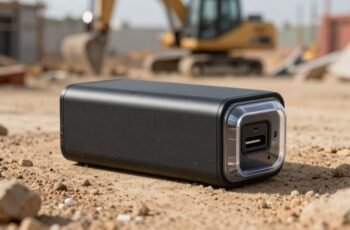
Proper storage of a portable power station is vital to guarantee its longevity and dependable performance when needed. We recognize that maintaining ideal conditions involves more than just unplugging it; factors like charge levels, environmental controls, and protective measures play an important role. By carefully preparing and monitoring your device during storage, you can prevent degradation and make certain it’s ready for use at a moment’s notice. Let’s explore the key strategies that make this possible.
Key Takeaways
- Fully charge the power station to 40-60% before storing and perform partial discharges every 3-6 months.
- Store in a cool, dry, and well-ventilated environment between 0°C and 25°C with humidity below 50%.
- Keep connectors clean, inspect for damage, and disconnect accessories to prevent parasitic drain.
- Use protective covers and seal ventilation ports to prevent dust, moisture, and impact damage.
- Regularly monitor environmental conditions and perform maintenance checks to ensure readiness for use.
How to Prepare Your Power Station for Storage
Before storing your portable power station, it’s crucial to perform a thorough preparation process to guarantee maximum longevity and performance. First, fully charge the unit to 100%, then allow it to discharge to approximately 50% to prevent capacity loss caused by prolonged overcharging or deep discharging. Next, clean all external surfaces with a soft, damp cloth to prevent dust and debris buildup that could impair cooling. Inspect connectors and ports for corrosion or debris, and clean or replace if necessary. Confirm the ventilation openings are unobstructed. Finally, store the power station in a cool, dry environment, avoiding temperature extremes and humidity, which can degrade internal components. Proper preparation minimizes chemical and physical deterioration during storage, maintaining ideal functionality for future use.
Choosing the Right Storage Location and Environment
Selecting a suitable storage location requires controlling environmental factors such as temperature, humidity, and ventilation. Maintaining an ideal temperature range prevents battery degradation, while a dry, well-ventilated space minimizes corrosion risks. Avoiding extreme conditions is essential to guarantee the power station’s longevity and performance.
Ideal Storage Temperature
Maintaining an ideal storage temperature is essential to preserving the performance and longevity of your portable power station. Typically, manufacturers recommend storing units between 0°C and 25°C (32°F to 77°F) to prevent degradation of internal components and battery chemistry. Temperatures outside this range accelerate chemical reactions that can cause capacity loss or damage. Elevated temperatures increase the risk of thermal runaway, while low temperatures hinder chemical processes, reducing immediate performance and long-term capacity. Consistent temperature control minimizes stress on the battery cells and electronic components, ensuring reliable operation when needed. Monitoring ambient conditions with a thermometer and adjusting storage location accordingly are critical steps. Ultimately, maintaining a stable, moderate environment optimizes both the lifespan and readiness of your portable power station.
Dry and Ventilated Space
Choosing an appropriate storage location for your portable power station involves guaranteeing it resides in a dry, well-ventilated space. Proper ventilation prevents heat buildup and moisture accumulation, which can degrade internal components. Moisture can cause corrosion and electrical faults, while poor airflow exacerbates temperature fluctuations. To optimize storage, consider the following factors:
| Factor | Consideration |
|---|---|
| Humidity Levels | Maintain below 60% to prevent condensation and corrosion |
| Ventilation Rate | Ensure consistent airflow to dissipate heat and moisture |
| Enclosure Type | Use breathable, non-porous containers or cabinets |
| Location | Avoid basements or enclosed spaces prone to dampness |
Avoid Extreme Conditions
To guarantee peak performance and longevity, it’s essential to store your portable power station away from extreme environmental conditions. Exposure to excessive heat, cold, humidity, or direct sunlight can degrade internal components and reduce battery life.
Consider these factors:
- Temperature Range: Maintain storage temperatures between 32°F and 77°F (0°C to 25°C) to prevent thermal stress.
- Humidity Levels: Keep humidity below 50% to avoid corrosion and moisture damage.
- Sunlight Exposure: Store in a shaded, dark location to prevent UV degradation.
- Environmental Stability: Avoid areas prone to rapid temperature fluctuations or weather extremes that can cause condensation or thermal expansion.
Proper environment control is vital for maintaining peak functionality and extending the device’s lifespan.
Properly Charging and Discharging Before Storage
To optimize storage, we need to guarantee the power station is charged to an appropriate level, typically around 50-70%, to prevent capacity loss. Avoiding deep discharges is critical, as they can damage the battery’s chemistry and reduce lifespan. Using the correct charging equipment guarantees safe and consistent power levels, minimizing risks associated with improper charging.
Optimal Charging Levels
Have you ever wondered about the ideal state to which a portable power station should be charged before storage? Maintaining optimal charge levels ensures battery longevity and performance. Ideally, the station should be charged to a specific range to minimize stress on the cells.
- Keep the charge between 40% and 60% for extended storage periods, as this range reduces chemical degradation.
- Avoid charging to 100%, which can accelerate capacity loss over time.
- Refrain from storing units with very low charge (below 20%) to prevent deep discharge damage.
- Use a controlled, stable power source to prevent overcharging or spikes that could harm the battery chemistry.
Adhering to these levels ensures the power station’s chemistry remains stable, preserving its capacity and durability during storage.
Avoid Deep Discharges
Ensuring the battery is not deeply discharged before storage is critical to maintaining its health and performance. Deep discharges cause irreversible chemical changes within the cells, reducing overall capacity and lifespan. To prevent this, we recommend maintaining a partial charge, ideally between 40% and 60%, before long-term storage. Fully discharging the battery can lead to voltage depression and cell degradation, complicating future charging cycles. Regularly monitoring the state of charge during storage allows us to avoid unintended deep discharges resulting from self-discharge or usage. Proper discharge levels preserve the electrochemical integrity of the cells and minimize the risk of capacity loss. Ultimately, controlling discharge depth is essential for optimizing the longevity and reliability of portable power stations during periods of inactivity.
Use Proper Charging Equipment
Using the correct charging equipment is essential for maintaining the health of your portable power station before storage. Proper charging guarantees ideal battery chemistry and longevity. To achieve this, consider these key points:
- Use the manufacturer-recommended charger to prevent voltage or current mismatches that could damage the battery.
- Ensure the charger provides the correct voltage and amperage specific to your power station model.
- Avoid third-party chargers with unknown specifications to reduce the risk of overcharging or undercharging.
- Monitor charging progress and disconnect once the battery reaches 80-90%, preventing over-accumulation of stress and degradation.
Employing the right equipment and following precise charging protocols helps sustain battery capacity and performance during long-term storage.
Protecting Your Power Station From Damage and Moisture
To effectively safeguard your portable power station from damage and moisture, it’s essential to understand the vulnerabilities inherent in its design. Most units contain sensitive electronic components, lithium-ion batteries, and ventilation ports that are susceptible to corrosion, short circuits, and physical impact. Exposure to moisture can cause internal corrosion, leading to reduced efficiency, failure, or safety hazards. Mechanical damage, such as impacts or drops, can compromise internal circuitry or case integrity. To mitigate these risks, store your station in a dry, climate-controlled environment, ideally within a protective case or enclosure that absorbs shocks. Seal all vents when not in use, and avoid stacking heavy objects on top. Regular inspection for signs of physical wear or moisture ingress is *vital* to maintaining operational integrity and longevity.
Maintaining and Checking Your Power Station During Storage
Regularly inspecting your power station during storage is crucial for early detection of potential issues that could compromise its functionality. Consistent checks guarantee the device remains in peak condition and prevents long-term damage.
Regular storage inspections help prevent damage and ensure your power station stays ready for use.
- Battery Voltage Monitoring: Use a multimeter to verify the voltage remains within recommended ranges, preventing deep discharge or overcharge conditions.
- Visual Inspection: Examine for corrosion, swelling, or dust accumulation on connectors and vents, which could impair performance.
- Temperature Tracking: Ensure the storage environment maintains stable temperatures, avoiding extreme heat or cold that can degrade internal components.
- Firmware Updates: Periodically connect the device to a power source to check for and install firmware updates, guaranteeing peak operation and security.
These steps maintain the power station’s integrity and readiness for future use.
Tips for Long-Term Storage and Ready-to-Use Readiness
Ensuring your portable power station remains ready for use after long-term storage requires deliberate preparation and maintenance. Start by fully charging the unit to optimize battery health and prevent capacity loss. Store it in a cool, dry environment with a temperature between 32°F and 77°F (0°C to 25°C) to minimize chemical degradation. Regularly inspect the device and perform partial discharges every three to six months, recharging to about 50% afterward to maintain battery balance. Disconnect all accessories to prevent parasitic drain. Use a protective cover to guard against dust and moisture. Document storage conditions and maintenance activities for future reference. These practices ensure your power station retains operational integrity, enabling swift deployment when needed, and prolonging its overall lifespan.
Frequently Asked Questions
How Often Should I Check My Power Station During Long-Term Storage?
We recommend checking your power station every three to six months during long-term storage, inspecting for battery health, ensuring proper charge levels, and verifying no corrosion or damage, to maintain peak performance and prevent potential issues.
Can I Store My Power Station in Extreme Temperatures?
Storing your power station in extreme temperatures risks severe damage, reducing lifespan and performance. We strongly recommend keeping it within manufacturer-specified ranges, as exposure to heat or cold can cause irreversible internal component degradation and safety hazards.
What Accessories Should I Remove Before Storing the Power Station?
We recommend removing all detachable accessories like charging cables, adapters, and external devices before storage to prevent damage or corrosion. Ensuring these components are stored separately maintains the power station’s integrity and readiness for future use.
How Do I Reset My Power Station After Long Storage?
We reset our power station by fully charging it, then performing a system reset according to the manufacturer’s instructions, ensuring all internal components recalibrate, and verifying functionality before reusing after long-term storage.
Is It Necessary to Calibrate the Battery After Storage?
We’d say calibration isn’t strictly necessary after storage, but it’s a wise move to guarantee accurate battery readings. Think of it as giving your power station a quick checkup—precision matters for peak performance and longevity.
Conclusion
In the end, storing our portable power stations might seem straightforward, yet neglecting these detailed steps can turn our preparedness into a costly oversight. Ironically, what’s meant to keep us powered during emergencies can become a dormant hazard if improperly stored. Proper maintenance guarantees readiness, but complacency risks the very reliability we rely on. So, let’s not just store our power stations—let’s do it right, or risk finding ourselves powerless when it truly counts.