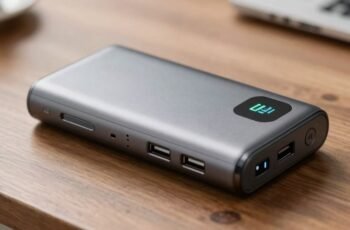
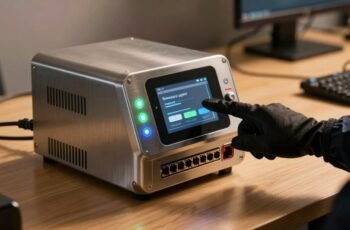
Understanding your energy requirements, calculating precise power needs, and selecting the appropriate capacity are essential steps in optimizing a portable power station. We focus on technical accuracy, analytical evaluation, and future planning to guarantee reliability. By aligning device wattage, usage duration, and safety margins, we can develop a thorough approach to selecting the right system. This process ultimately determines how well your power station supports various activities—whether for camping, RVing, or emergency preparedness—making it a critical consideration for any user.
Key Takeaways
- Determine device wattage and usage hours to calculate total energy needs for accurate power station sizing.
- Understand battery capacity in watt-hours to estimate device run time and match capacity to activity demands.
- Assess peak startup power and surges to select a power station that can handle appliance demands reliably.
- Use activity-specific energy estimates to choose appropriate capacity, ensuring sufficient power for camping, RVing, or emergencies.
- Add a safety margin of 20-30% for future growth and system expansion to ensure long-term reliability.
How to Determine Your Power Needs Based on Devices and Usage
To accurately determine your power needs, we must first identify the total energy consumption of each device you plan to run and the duration of their use. This involves examining the wattage ratings, typically listed on device labels or manuals, and multiplying by the expected hours of operation. For example, a device rated at 100W used for 3 hours consumes 300Wh. Summing these values across all devices provides the total energy requirement. It’s essential to account for peak startup power, which can be higher than continuous running wattage, especially for motors or compressors. Precise calculations enable selecting a power station with adequate capacity, ensuring uninterrupted operation without overestimating, which could lead to unnecessary expense. Accurate assessment forms the foundation for efficient power station sizing.
Understanding Battery Capacity and How It Affects Run Time
Understanding battery capacity is essential because it directly determines how long your portable power station can sustain connected devices. Capacity, measured in watt-hours (Wh), indicates the total energy available. Higher capacity means longer run times, but efficiency depends on device power consumption. To illustrate, consider this comparison:
| Capacity (Wh) | Approximate Run Time for 50W Device | Implication |
|---|---|---|
| 300 Wh | 6 hours | Suitable for short-term use |
| 600 Wh | 12 hours | Extended use, versatile applications |
| 900 Wh | 18 hours | Heavy-duty or multiple devices |
This table highlights how capacity directly influences operational duration, emphasizing the need to match power station capacity with your specific power demands.
Choosing the Right Power Station Capacity for Camping, RVing, and Emergencies
Choosing the appropriate power station capacity for camping, RVing, and emergency preparedness requires a careful assessment of your specific energy needs and usage patterns. To determine the right size, analyze the total wattage and duration of essential devices—such as refrigerators, lights, and communication equipment—that you plan to operate simultaneously. Consider peak power demands and startup surges for appliances, guaranteeing the power station can handle these transient loads. For extended use, evaluate the capacity in watt-hours, aligning it with your expected daily consumption to avoid frequent recharges. Precise capacity selection minimizes excess weight and cost while guaranteeing reliable operation. This analytical approach ensures your power station efficiently supports your activities without over- or under-sizing, optimizing both performance and portability.
How to Calculate and Compare Power Station Sizes for Different Activities
Calculating and comparing power station sizes for different activities involves a systematic approach to quantify energy requirements accurately. We start by listing essential devices, their wattages, and estimated daily usage. Summing these values provides the total energy needed, guiding power station selection. To facilitate comparison, consider the following:
| Activity | Total Wattage | Estimated Daily Usage (Wh) | Power Station Capacity Needed (Wh) | Notes |
|---|---|---|---|---|
| Camping | 200W | 400Wh | ≥400Wh | Lightweight, portability |
| RVing | 500W | 1,200Wh | ≥1,200Wh | Higher capacity required |
| Emergency | 300W | 600Wh | ≥600Wh | Reliable backup power |
| Off-grid | 700W | 1,680Wh | ≥1,680Wh | Extended use |
| Events | 1000W | 2,400Wh | ≥2,400Wh | Heavy-duty appliances |
This method guarantees precise, activity-specific power station sizing.
Tips for Future-Proofing Your Power Setup With Adequate Capacity
To effectively future-proof your power setup, we must prioritize capacity margins that accommodate both current and anticipated energy demands. This involves analyzing usage trends and projecting future needs based on device upgrades, expanding appliance loads, and potential emergency requirements. A conservative approach recommends selecting a power station with at least 20-30% extra capacity beyond current consumption estimates, guaranteeing resilience to unforeseen load spikes. Incorporating modular or expandable systems allows flexibility for growth without extensive replacements. Additionally, consider efficiency factors and the longevity of the power station’s components, as these influence sustainable capacity. Precise capacity planning minimizes obsolescence risk, reduces the need for frequent upgrades, and ensures reliable power availability over the system’s lifespan, aligning with long-term operational and safety standards.
Frequently Asked Questions
What Are the Best Brands for Portable Power Stations?
We recommend brands like Goal Zero, Jackery, EcoFlow, and Anker for portable power stations, as they offer reliable, high-capacity, and innovative designs backed by solid customer support, ensuring peak performance across diverse emergency and outdoor power needs.
How Long Do Portable Power Stations Typically Last?
Think of portable power stations as reliable workhorses—typically lasting 500 to 1,500 charge cycles, which equates to about 3-5 years of regular use before capacity diminishes noticeably. Proper maintenance can extend their lifespan considerably.
Can Portable Power Stations Be Charged via Solar Panels?
Yes, portable power stations can be charged via solar panels; they typically incorporate MPPT or PWM charge controllers to optimize energy transfer, making solar charging efficient and eco-friendly, especially in remote or off-grid applications.
Are Portable Power Stations Safe for Outdoor Use?
Absolutely, portable power stations are safe for outdoor use when properly designed, with robust insulation and overload protection. Like a modern knight’s armor, they shield your devices, ensuring reliable energy even in unpredictable environments.
How Do Weather Conditions Affect Power Station Performance?
Weather conditions considerably influence power station performance; extreme temperatures can reduce battery efficiency, moisture causes corrosion, and high winds may physically damage units. We recommend proper insulation, sheltered placement, and temperature monitoring for ideal operation in adverse conditions.
Conclusion
By carefully analyzing our devices’ power demands and understanding battery capacities, we craft a tailored energy blueprint that withstands the tests of time and circumstance. Think of your power station as a finely tuned engine—size it too small, and it stalls; too large, and it’s wasteful. With precise calculations and future-proofing, we guarantee our energy reservoir flows seamlessly, powering our adventures and emergencies with the reliability of a well-oiled machine.