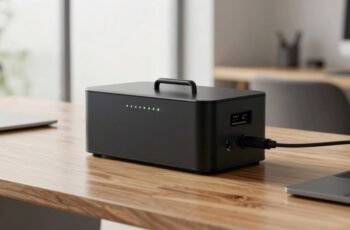
When selecting a portable power station, it’s essential we precisely evaluate your energy requirements to avoid over- or under-sizing. By analyzing the wattage and expected runtime of your critical devices, we can determine the minimum capacity needed for reliable operation. This process involves examining both current needs and potential future demands, which raises important questions about balancing portability with power capacity—considerations that directly impact your device compatibility and overall efficiency.
Key Takeaways
- List essential devices and their wattage, then calculate total watt-hours needed for your typical usage duration.
- Determine the maximum power demand, including surge wattage for devices with motors or compressors.
- Match your total energy requirement with a power station capacity that provides sufficient runtime and supports peak loads.
- Consider portability versus capacity needs based on your activity, such as camping, emergency backup, or outdoor work.
- Factor in future expansion or additional devices to select a scalable power station size that meets long-term needs.
Understanding Your Power Needs: How Much Electricity Do You Use?
To determine the appropriate size of a portable power station, we first need to assess our actual power consumption. This involves analyzing the wattage requirements of devices we intend to power. Start by listing all essential electronics and their power ratings, typically found on labels or in manuals. Calculate the total watt-hours needed by multiplying each device’s wattage by its estimated daily usage time. This provides a baseline for energy capacity. Additionally, consider surge wattage for devices with motors or compressors, which temporarily demand higher power during startup. Understanding these metrics allows us to identify the minimum capacity required to meet our needs without overestimating. Precise power assessment ensures the selected portable power station can reliably support our devices in various scenarios.
Different Types of Portable Power Stations and Their Capacities
Different types of portable power stations are designed to meet varying energy demands, and understanding their capacities helps us select the right model for specific needs. These devices range from compact units with 100-300Wh, suitable for charging small electronics, to high-capacity systems exceeding 2,000Wh, capable of powering larger appliances. Lithium-ion and lithium-polymer batteries dominate the market due to their high energy density and longevity, while lead-acid models offer affordability but lower energy density. Capacity directly influences runtime and the number of devices supported simultaneously. Power output, measured in watts, determines what appliances can be operated, with pure sine wave inverters providing cleaner power essential for sensitive electronics. Analyzing these specifications allows us to match a power station’s capacity precisely to our operational requirements.
How to Calculate the Right Size for Your Camping Adventures
When determining the appropriate size of a portable power station for camping, we must first assess our specific energy requirements by identifying the devices we plan to power and their consumption rates. This involves calculating the total watt-hours (Wh) needed per device and summing these values for an overall estimate. To simplify, consider the table below:
| Device | Power Draw (W) | Usage Duration (hours) |
|---|---|---|
| LED Lantern | 10 | 4 |
| Smartphone Charger | 5 | 3 |
| Small Cooler | 50 | 6 |
Choosing a Power Station for Emergency Backup: What Size Is Suitable?
Selecting the appropriate size of a portable power station for emergency backup requires a precise assessment of your essential energy needs. To determine this, consider the power requirements of critical devices and their runtime.
Key factors include:
- The wattage of essential appliances, like refrigerators or medical devices
- The duration each device must operate during an outage
- The total combined load, ensuring the station’s continuous power capacity is sufficient
- Peak power demands, which can be higher than running wattage, especially for devices with motors or compressors
Matching Power Station Size to Your Essential Devices and Appliances
To effectively match the size of a portable power station to your essential devices and appliances, we must first quantify their power requirements and operational demands. This involves identifying the wattage ratings of each device, including startup surges where applicable, and summing these values to determine total energy needs. Continuous power consumption indicates the baseline capacity necessary for sustained operation, while surge wattage reflects the maximum instantaneous power draw. Accurate assessment requires reviewing device specifications and factoring in usage duration. Overestimating can lead to unnecessary weight and cost, while underestimating risks insufficient power and device shutdowns. By analyzing these parameters precisely, we can select a power station capable of reliably supporting your essential devices without excess capacity, ensuring efficiency and operational confidence.
How Battery Capacity and Wattage Influence Station Size and Performance
Battery capacity directly determines how long a power station can supply energy, impacting overall usability for extended periods. Wattage and power output influence the station’s ability to run high-demand devices without overloading. Understanding these relationships helps us select a station that balances size, weight, and performance for specific application requirements.
Battery Capacity and Usage
Understanding how battery capacity and wattage affect portable power stations is essential for optimizing performance and selecting the right size. Battery capacity determines how long a station can power devices before recharging is needed, measured in watt-hours (Wh). Higher capacity allows extended use but increases size and weight. Usage patterns influence the ideal capacity; frequent or high-draw devices require larger batteries. Key considerations include:
- Extended outdoor adventures requiring multiple charges of essential devices
- Emergency preparedness where prolonged power supply is critical
- Powering multiple devices simultaneously with high energy demands
- Lightweight, portable options for minimal, short-term use
Wattage and Power Output
While battery capacity determines how long a portable power station can supply energy, wattage and power output directly influence its ability to handle multiple or high-demand devices simultaneously. Wattage, measured in watts (W), indicates the maximum power the station can deliver at any moment. Higher wattage allows for running devices like refrigerators, power tools, or multiple appliances concurrently without overloads. Power output capacity, often represented by surge and continuous wattage ratings, reflects the station’s ability to start and sustain demanding loads. A station with insufficient wattage may trip or fail to power essential devices, regardless of its battery size. Consequently, selecting a station with appropriate wattage ensures reliable performance, especially when managing high-power or multiple devices, aligning capacity with your specific energy demands.
Determining the Best Size for Outdoor Activities and Extended Trips
To determine the ideal power station size for outdoor activities and extended trips, we must first assess the specific power requirements and expected duration of use. We then compare portable options against heavy-duty models to guarantee the station can handle all devices reliably over the planned timeframe. This analytical approach helps maximize performance while maintaining efficiency and practicality.
Power Needs Assessment
Evaluating your power needs is a crucial step in selecting the appropriate portable power station size for outdoor activities and extended trips. Accurately determining device consumption ensures reliable power without excess weight or cost. Consider the following factors:
- Total wattage of essential devices, such as laptops, lights, and small appliances
- Peak power requirements during startup, especially for refrigerators or power tools
- Power consumption patterns, including continuous versus intermittent use
- Future expansion plans for additional devices or increased energy demands
Duration of Use
Determining the duration of use is essential for selecting the appropriate portable power station size, as it directly impacts battery capacity requirements. To accurately assess this, we must analyze the total energy consumption of devices over the intended timeframe, considering watt-hour (Wh) ratings and usage patterns. For extended trips or outdoor activities, understanding the operational hours for each device allows us to calculate the cumulative energy demand. This process involves summing the power draw of all devices multiplied by their daily usage, then extending that over multiple days if necessary. A power station with insufficient capacity will deplete quickly, risking interruptions, while an oversized unit may incur unnecessary cost and weight. Precise duration calculations guarantee ideal capacity, balancing endurance with portability.
Portable vs. Heavy Duty
Choosing the right size of portable power station hinges on understanding the demands of outdoor activities and extended trips. A lightweight, portable unit suits short outings, providing enough power for essential devices without bulk. Conversely, heavy-duty models are designed for prolonged use, capable of powering larger appliances and multiple devices simultaneously. Considerations include:
- Power output needed for appliances like refrigerators or power tools
- Duration of extended trips requiring sustained energy supply
- Portability versus capacity trade-offs
- Environmental conditions affecting device operation and safety
Budget Considerations: Finding the Balance Between Size and Cost
While selecting a portable power station, balancing size and cost is essential to guarantee you get the most value for your investment. We analyze power capacity, weight, and features against budget constraints to optimize efficiency. Larger units offer increased watt-hour capacity and versatility but come with higher upfront costs and reduced portability. Conversely, smaller models are more affordable and lightweight but limit runtime and power options. To make an informed decision, consider your energy requirements and future scalability, guaranteeing the initial investment aligns with long-term needs. Cost-effective options often involve trade-offs, so prioritizing critical features—such as inverter quality or charging speed—can maximize utility without overspending. Ultimately, a balanced approach ensures reliable power support without unnecessary financial strain.
Tips for Scaling Up or Down: Adjusting Your Power Station Size Over Time
Adjusting your portable power station size over time requires a strategic approach to guarantee your setup remains efficient and cost-effective. As your power needs evolve, consider these key factors:
- Assess current energy consumption to identify new device requirements or reduced needs.
- Analyze usage patterns—seasonal variations or increased outdoor activities may prompt size adjustments.
- Evaluate charging infrastructure—adding solar panels might allow for smaller, more efficient units.
- Plan for future expansions—select modular systems that can be upgraded without full replacement.
Final Checklist: How to Pick the Perfect Portable Power Station Size for Your Needs
To determine the ideal portable power station size for your needs, we must systematically evaluate your energy requirements and usage patterns. Begin by listing essential devices, noting their wattage and average run times. Calculate total energy consumption in watt-hours to establish a baseline capacity. Consider peak power demands to guarantee the station can handle startup surges, especially for appliances like refrigerators or power tools. Analyze your typical usage environment—outdoor, remote, or urban—and factor in portability needs versus capacity. Prioritize features such as inverter type, charging options, and battery chemistry for longevity and efficiency. This structured approach ensures you select a station that balances capacity, weight, and functionality, optimizing performance without excess. A thorough assessment prevents under- or over-specification, aligning power capacity precisely with your actual demands.
Frequently Asked Questions
Can a Smaller Power Station Be Expanded Later?
Absolutely, smaller power stations can often be expanded later through modular designs or additional batteries, much like building blocks. We recommend verifying your model’s expandability features to guarantee seamless scalability for your energy needs.
How Does Climate Affect Power Station Size Requirements?
Climate impacts power station size needs by influencing energy consumption and device efficiency; in colder or hotter environments, we factor in additional capacity for heating or cooling, ensuring reliable operation and prolonged device lifespan despite environmental stresses.
Is Weight More Important Than Capacity for Portability?
Weight often trumps capacity in portability, as lighter power stations are easier to carry over long distances. We analyze this trade-off critically, balancing energy needs with mobility, because convenience hinges on minimizing weight without sacrificing essential power output.
What Are the Best Brands for Compact Power Stations?
We find Anker, Jackery, and Goal Zero to be top brands for compact power stations, offering reliable performance, innovative features, and durable build quality. Their compact designs optimize portability without sacrificing essential power capacity for versatile use.
How Do Solar Panels Influence the Ideal Size Choice?
Solar panels act as the heartbeat of your power system, dictating size needs by converting sunlight into energy. We analyze their wattage, efficiency, and your consumption patterns to determine a *best* power station size that sustains your energy flow.
Conclusion
Choosing the right portable power station is like balancing a delicate scale—too small, and your devices go powerless; too large, and portability suffers. By carefully analyzing your energy needs and future demands, we can optimize capacity without sacrificing mobility. This precise calibration guarantees your devices are always ready, whether in the wild or during an outage. Ultimately, an informed selection transforms a simple device into a reliable energy partner, seamlessly blending efficiency with practicality.