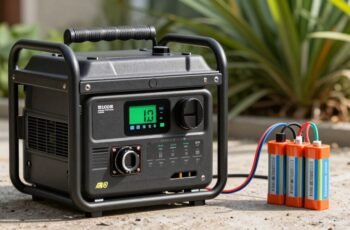
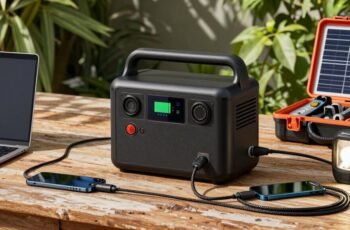
Proper storage of solar generators is vital to guarantee their longevity and dependable performance when needed. We recognize that maintaining ideal conditions—such as temperature, humidity, and protection from environmental factors—is critical, but the specific procedures and best practices can vary. To maximize your generator’s lifespan and safety, it’s important to follow precise guidelines and precautions that often go beyond basic storage measures. Let’s explore these key considerations to make sure your equipment remains in top condition over time.
Key Takeaways
- Store in a cool, dry, well-ventilated area away from direct sunlight and extreme temperature fluctuations.
- Keep the generator elevated and protected with weatherproof covers to prevent moisture and environmental damage.
- Maintain battery charge at 40-60% and regularly monitor voltage levels to ensure longevity and performance.
- Ensure at least 5 feet clearance from combustible materials and 3 feet from ventilation openings for safety and cooling.
- Disconnect batteries or set to maintenance mode for long-term storage, and perform periodic checks and charging.
How to Properly Store Your Solar Generator for Longevity
Proper storage is vital to guarantee the longevity and peak performance of your solar generator. To achieve this, ensure the device is stored in a cool, dry environment with stable temperature conditions, ideally between 32°F and 77°F (0°C and 25°C). Avoid exposure to direct sunlight, high humidity, or extreme temperature fluctuations, as these can degrade internal components and reduce battery lifespan. Before storage, fully charge the unit to maximize battery health, then disconnect all cables and external attachments to prevent corrosion or accidental discharge. Regularly inspect the generator for signs of moisture or corrosion, and recharge the battery periodically if stored for extended periods. Implementing these precise storage practices will maintain maximum operational capacity and extend the device’s functional life.
Choosing the Right Storage Location for Safety and Efficiency
Selecting an ideal storage location requires ensuring proper ventilation and airflow to prevent heat buildup and reduce the risk of overheating. Additionally, maintaining a safe distance from combustible materials minimizes fire hazards. These considerations are essential for maximizing both safety and operational efficiency of your solar generator.
Ventilation and Airflow
Why does ventilation matter when choosing a storage location for your solar generator? Proper airflow prevents heat buildup, which can degrade internal components and reduce operational lifespan. Insufficient ventilation traps heat generated during charging and discharging cycles, risking thermal runaway or damage. An ideal storage area facilitates continuous airflow, dissipating heat efficiently and maintaining a stable environment. Good ventilation also minimizes humidity accumulation, which can cause corrosion and compromise electrical connections. To guarantee safety and performance, select a location with natural airflow or consider installing vents or exhaust fans. Regularly monitoring ambient temperature and airflow patterns helps maintain an environment that supports the generator’s reliability and longevity. To conclude, adequate ventilation is crucial for safe, efficient, and durable solar generator storage.
Distance From Combustibles
Ensuring the storage area is a safe distance from combustibles is essential to prevent fire hazards and protect both the equipment and surrounding environment. Proper spacing minimizes risk and facilitates maintenance access. We recommend maintaining a minimum of:
- Five feet from any combustible materials, including wood, paper, or flammable liquids.
- Three feet clearance around ventilation openings to ensure proper airflow and heat dissipation.
- Ten feet from structures or vegetation that could catch fire if a generator overheats or malfunctions.
This distance ensures that heat, sparks, or potential electrical faults don’t ignite nearby materials. Regular inspection and adherence to manufacturer guidelines are crucial for ongoing safety. Proper placement reduces fire risk and enhances operational safety.
Best Practices for Charging and Discharging During Storage
To optimize the lifespan and performance of solar generators during storage, it’s essential to follow established best practices for charging and discharging. Maintain the battery at a state of charge between 40% and 60%, as overcharging accelerates degradation and deep discharges cause capacity loss. Use a charger compatible with the generator’s specifications to guarantee precise voltage and current regulation. Avoid frequent partial discharges; instead, perform full cycles periodically to calibrate capacity. During long-term storage, disconnect the battery or set the device to a maintenance mode if available. Monitor voltage levels regularly to prevent voltage extremes. Keep the generator in a temperature-controlled environment, avoiding excessive heat or cold, which can impair chemical stability and reduce overall longevity.
How to Maintain Your Solar Generator While in Storage
Maintaining your solar generator during storage requires consistent oversight to prevent deterioration. Regular checks ensure peak performance and longevity.
Regular maintenance during storage preserves your solar generator’s performance and extends its lifespan.
Key maintenance steps include:
- Charge to an ideal level: Keep the battery charged between 50-70% to minimize capacity loss and chemical degradation.
- Inspect connections and terminals: Ensure all wiring is secure and free of corrosion; clean terminals with a contact cleaner if necessary.
- Monitor temperature conditions: Store in a climate-controlled environment, avoiding extreme heat or cold, which can impair battery chemistry and internal components.
Adhering to these practices helps preserve your generator’s functionality, reduces the risk of damage, and ensures readiness when needed. Consistent maintenance during storage is essential for reliable long-term performance.
Protecting Your Solar Generator From Environmental Damage
Proper storage practices go beyond regular maintenance and directly impact your solar generator’s resilience against environmental threats. To minimize damage, store the unit in a climate-controlled environment, avoiding extreme temperatures and humidity that can degrade internal components and reduce lifespan. Guarantee the storage area is protected from direct sunlight, which can cause thermal stress and material deterioration. Use weatherproof enclosures or covers to shield the generator from moisture, dust, and debris, preventing corrosion and electrical faults. Elevate the unit off the ground to prevent water ingress during flooding or heavy rain. Regularly inspect storage conditions for signs of environmental stress, and implement measures such as desiccants or dehumidifiers in high-humidity environments. These steps maintain operational integrity and extend the service life of your solar generator.
How to Safely Handle and Transport Your Solar Generator
To guarantee safety, we emphasize proper handling techniques that prevent damage and personal injury. Safe transportation practices involve secure packaging and avoiding exposure to extreme conditions during movement. Additionally, maintaining a ideal storage environment minimizes risks associated with physical impacts and environmental factors.
Proper Handling Techniques
How can we guarantee the safe handling and transportation of our solar generators? Proper handling minimizes damage and ensures user safety. First, always disconnect all cables before moving the unit to prevent electrical hazards. Second, use correct lifting techniques: keep your back straight, bend at the knees, and lift with your legs to avoid injury. Third, secure the generator with appropriate straps or padding during transport to prevent shifting and potential damage. Handle the device with clean, dry hands to maintain grip and avoid corrosion. Never carry the generator by cords or connectors, as this can cause disconnections or damage. Adhering to these techniques ensures safe, efficient handling, reducing risk and prolonging your solar generator’s lifespan.
Safe Transportation Practices
Ensuring safe transportation of your solar generator requires careful planning and adherence to specific procedures. Prioritize securing the unit to prevent movement, using appropriate straps and padding. Avoid abrupt stops or sharp turns to minimize internal component damage. Use a stable, level surface during transit, and verify that all connections are disconnected and stored properly.
| Transportation Step | Key Considerations |
|---|---|
| Secure Equipment | Use straps, padding, and locking mechanisms |
| Disconnect Cables | Prevent strain and accidental disconnection |
| Stabilize Unit | Ensure it remains stationary during transit |
| Check Vehicle Fit | Confirm the generator fits securely without shifting |
Storage Environment Tips
Proper handling and transportation of your solar generator depend on maintaining a controlled storage environment that minimizes risks of damage or degradation. To guarantee safety and longevity, adhere to these environment tips:
- Store in a temperature-controlled area between 32°F and 77°F (0°C and 25°C) to prevent thermal stress.
- Keep the generator away from moisture and humidity to avoid corrosion and electrical faults.
- Use insulated, shock-absorbent containers during transport to prevent mechanical damage.
Maintaining these conditions reduces the risk of performance loss and safety hazards. Regularly inspect storage conditions and implement protective measures like ventilation and sealed enclosures. Proper environmental control safeguards both the device’s integrity and user safety during storage and transit.
Signs Indicating It’s Time to Service or Replace Your Stored Generator
Although stored solar generators are designed for long-term use, certain signs indicate that maintenance or replacement may be necessary. Visible corrosion on terminals or connectors suggests compromised electrical integrity and warrants inspection. Unusual heating during operation or abnormal noises can signal internal component degradation or electrical faults, increasing risk of failure. A significant decline in battery capacity or inconsistent power output indicates aging cells or electrolyte imbalance, requiring servicing or replacement. Additionally, persistent error codes or warning indicators on control panels point to underlying system issues. Moisture ingress or corrosion within the enclosure can accelerate component deterioration, necessitating a thorough inspection. Recognizing these signs promptly ensures peak performance, safety, and longevity of your solar generator system.
Common Mistakes to Avoid When Storing Solar Generators
Storing solar generators improperly can substantially reduce their lifespan and compromise safety, so avoiding common mistakes is essential.
- Neglecting Temperature Control: Storing generators in areas with extreme temperatures accelerates component degradation and chemical instability. Maintain a temperature range of 32°F to 77°F (0°C to 25°C) for proper preservation.
- Ignoring Battery Maintenance: Failing to fully charge or regularly check the battery leads to capacity loss and potential corrosion. Keep batteries at 50-70% charge and periodically verify voltage levels.
- Poor Ventilation and Moisture Control: Storing in humid or unventilated spaces fosters corrosion and mold growth. Guarantee storage areas are dry, well-ventilated, and protected from direct contact with water or excessive humidity.
Questions to Ask Before Storing Your Solar Generator for Extended Periods
Before placing your solar generator into extended storage, it’s essential to ask specific questions to guarantee it remains functional and safe over time. First, inquire about the ideal state of charge; most units should be stored at around 50-70% capacity to prevent battery degradation. Next, verify if the battery chemistry requires specific temperature ranges and ensure storage conditions comply. Ask whether the unit needs a periodic charge or maintenance check during inactivity to prevent capacity loss. Additionally, confirm that all ventilation and moisture controls are adequate to avoid corrosion or mold. Finally, review manufacturer guidelines for long-term storage, including recommended cleaning procedures and protective measures. Addressing these questions ensures your solar generator remains reliable, safe, and ready for use after extended periods.
Frequently Asked Questions
Can Solar Generators Be Safely Stored Outdoors Long-Term?
Yes, solar generators can be stored outdoors long-term if protected from moisture, extreme temperatures, and direct sunlight. We recommend using a weatherproof enclosure, ensuring proper ventilation, and periodically inspecting the unit for corrosion or damage.
What Safety Gear Should I Use When Handling a Solar Generator?
We recommend wearing insulated gloves, safety goggles, and a dust mask when handling solar generators. Always guarantee proper grounding, avoid metal contact, and handle with dry hands to prevent electrical shocks and short circuits.
How Does Temperature Affect Solar Generator Storage?
Temperature greatly impacts solar generator storage; high heat accelerates battery degradation, reducing lifespan by up to 50%, while extreme cold can cause internal damage. We recommend maintaining storage temperatures between 40-80°F for ideal longevity.
Are There Specific Storage Containers Recommended for Solar Generators?
We recommend using heavy-duty, ventilated plastic or metal containers with secure seals for solar generator storage. These containers prevent moisture buildup, provide insulation, and guarantee durability, ultimately preserving your generator’s performance and safety during long-term storage.
Can Stored Solar Generators Be Used Immediately After Long-Term Storage?
Yes, stored solar generators can be used immediately after long-term storage, but we recommend inspecting connections, testing output, and ensuring batteries are properly charged—think of it as giving your equipment a thorough health check before operation.
Conclusion
Proper storage transforms your solar generator into a well-tuned engine ready to perform when needed. Think of it as a delicate instrument, requiring careful handling and a stable environment to stay in peak condition. By following best practices, you guarantee longevity and reliability. Just as a master craftsman maintains their tools, diligent storage safeguards your investment, keeping your solar generator a dependable power source, always prepared to light the way in times of need.