Did you know that improper maintenance can substantially reduce the lifespan of your outdoor power station, even if it appears to be functioning normally? Many users overlook routine cleaning and environmental protection, risking internal damage or performance drops. Proper care involves detailed procedures, from cleaning vents to weatherproofing, which are vital for long-term reliability. Understanding these specifics can be the key to ensuring your power station remains efficient in demanding outdoor conditions.
Key Takeaways
- Use weatherproof enclosures and elevate the station to prevent water and ground moisture contact.
- Regularly inspect for rust, corrosion, and sealant damage to maintain protection against environmental elements.
- Keep batteries charged between 20-80% and avoid deep discharges to prolong lifespan.
- Clean vents and cooling fans with compressed air and ensure the device is dry before storage.
- Operate within recommended load capacities and use surge protectors for safe, efficient use outdoors.
How to Clean and Store Your Outdoor Power Station Properly
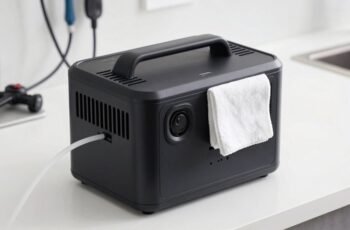
Proper cleaning and storage of your outdoor power station are vital to guarantee peak performance and longevity. We recommend disconnecting all cables and powering down the unit before cleaning. Use a soft, lint-free cloth to remove dust, dirt, and debris from vents, connectors, and external surfaces. For stubborn grime, lightly dampen the cloth with distilled water or a mild, non-abrasive solution; avoid harsh chemicals that could damage sensitive components. Compressed air can help clear dust from internal vents and cooling fans, but avoid excessive force. When storing, make certain the device is completely dry and stored in a cool, dry environment, away from direct sunlight and extreme temperatures. Proper cable management and periodic inspection for corrosion or damage are vital, preserving integrity and preventing operational issues.
Tips for Maintaining Battery Health and Longevity
Maintaining the health and longevity of your outdoor power station’s battery requires disciplined attention to usage and charging practices. To optimize battery lifespan, consider these key points:
Careful use and proper charging extend your outdoor power station’s battery life.
- Avoid deep discharges — keep the battery charge level between 20% and 80% to reduce stress on the cells and prevent capacity loss.
- Use a compatible charger — always connect to the manufacturer-recommended charger to prevent voltage fluctuations that can damage the battery.
- Limit exposure to high temperatures — store and operate within the recommended temperature range (usually 0°C to 45°C) to minimize thermal degradation.
- Perform regular maintenance cycles — periodically fully discharge and recharge to recalibrate the battery’s capacity indicator, ensuring accurate readings.
Consistent application of these practices sustains battery efficiency and extends service life.
How to Protect Your Power Station From Weather and Environmental Damage
Since outdoor power stations are exposed to varying weather conditions, it’s essential to implement protective measures that shield them from environmental damage. Proper protection prevents corrosion, water ingress, and temperature fluctuations that can impair performance and reduce lifespan. Use weatherproof enclosures rated for outdoor use, ensuring sealing against dust and moisture. Elevate the station on a stable, non-conductive surface to avoid ground moisture contact. Regularly inspect for signs of rust, corrosion, or sealant degradation.
| Element | Protective Measure | Purpose |
|---|---|---|
| Enclosure | Weather-resistant casing | Prevents water and dust ingress |
| Ventilation | Proper airflow design | Avoids overheating |
| Elevation | Raised platform | Protects from ground moisture |
Troubleshooting Common Issues and When to Seek Repairs
While outdoor power stations are designed for durability, electrical and mechanical issues can still arise over time, requiring systematic troubleshooting to identify the root causes. First, check the power input and outlet connections for secure contact and signs of corrosion. Second, verify the battery status, ensuring it’s properly charged and not swollen or leaking. Third, inspect internal fuses and circuit breakers for continuity; blown fuses indicate overloads or short circuits. Fourth, listen for abnormal noises or vibrations indicating motor or fan failure. If issues persist after these steps, or if you observe burnt smells, excessive heat, or electrical sparks, it’s time to seek professional repair. Proper diagnosis prevents further damage and guarantees reliable operation during your outdoor activities.
Best Practices for Safe and Efficient Usage During Your Adventures
To guarantee safe and efficient operation of your outdoor power station during adventures, we must adhere to specific best practices that minimize risks and optimize performance. Prior to use, inspect cables, connectors, and vents for damage or debris, ensuring proper airflow and electrical integrity. Always operate within the manufacturer’s recommended load capacity to prevent overheating or component failure. Use surge protectors when connecting sensitive devices to mitigate voltage spikes. Keep the device in a well-ventilated, shaded environment to avoid thermal overload, especially in high temperatures. Periodically monitor battery levels and avoid deep discharges to prolong lifespan. When storing, discharge the unit to around 50% and store in a dry, cool location. Following these practices enhances safety, extends equipment longevity, and ensures reliable power during your outdoor activities.
Frequently Asked Questions
Can I Use My Outdoor Power Station While It’s Charging?
Yes, you can use your outdoor power station while it charges, but it may reduce charging efficiency and battery lifespan. We recommend monitoring usage and charging status to prevent overloading, ensuring peak performance and safety during simultaneous operation.
What Accessories Are Compatible With My Outdoor Power Station?
Think of accessories as the toolkit that enhances your outdoor power station’s capabilities. We recommend compatible solar panels, extension cords, and protective cases—always check the manufacturer’s specifications to guarantee seamless integration and peak performance.
How Do I Update the Firmware on My Power Station?
We update the firmware on our power stations by downloading the latest firmware from the manufacturer’s website, connecting the device via USB or Wi-Fi, then following the on-screen prompts or software instructions to initiate and complete the update.
Is There a Recommended Weight Limit for Portable Use?
We recommend a weight limit of around 20 pounds for portable outdoor power stations to guarantee safe handling, ideal performance, and battery longevity. Exceeding this weight can cause strain, damage, or reduced efficiency during transport and use.
Can I Connect Multiple Power Stations for Higher Capacity?
Yes, you can connect multiple power stations for higher capacity, but verify they are compatible, synchronized properly, and that your power management system can handle the combined load safely to prevent overloads or damage.
Conclusion
By following these detailed care tips, we can extend our outdoor power stations’ lifespan and guarantee reliable performance. Regular maintenance reduces the risk of failure—did you know that improper storage and neglect can decrease battery life by up to 50%? With diligent cleaning, weather protection, and proper handling, we maximize efficiency and safety during our adventures. Consistent care isn’t just recommended; it’s essential for maintaining peak functionality in demanding outdoor environments.