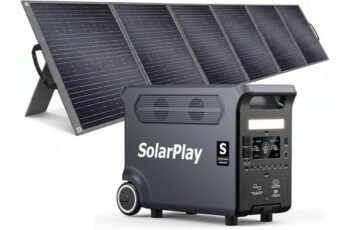
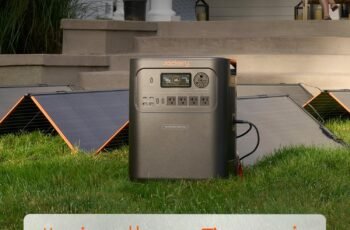
At 1,843.2Wh, the EBL 2400W Portable Power Station offers substantially more capacity than many compact power stations, but its solar bundle’s real-world recharge time matters as much as its headline output. We’ll compare its two 200W panels, charging options, and device support with the demands of backup and RV use. The key question is whether this combination delivers enough flexibility to justify its weight and charging limits.
Key Takeaways
- The EBL 2400W pairs a 1,843.2Wh LiFePO4 battery with 2,400W continuous output for home backup, RV trips, and off-grid use.
- Four AC outlets, 100W USB-C ports, USB-A ports, DC outputs, and a wireless pad support varied devices.
- The two included 200W solar panels may take 6–14 hours to recharge the station, depending on sunlight and conditions.
- AC charging takes about 1.6–2 hours; combined AC and solar charging can take 1.8 hours or less.
- Its high capacity and flexible charging suit demanding needs, but weight, cost, and limited runtime at high loads are trade-offs.
Solar Charging Performance
How quickly can the EBL 2400W recharge from sunlight? With the included two 200W panels, we can expect a full charge in about 6–14 hours, depending on sunlight and operating conditions. An 800W solar input cuts that estimate to roughly three hours, while combined AC and solar charging takes 1.8 hours or less. The panels’ monocrystalline cells reach up to 23.5% conversion efficiency, a useful benchmark when comparing portable solar bundles. Cloudy weather efficiency will be lower, so we should treat rated times as ideal estimates. For panel angle optimization, we can position the panels toward direct sun and adjust as daylight shifts.
Detailed features
Beyond solar performance, the EBL 2400W combines a 1,843.2Wh LiFePO4 battery with 2,400W continuous output, giving it capacity for home backup, RV use, and off-grid power. This battery chemistry and output capacity suit heavier loads than smaller portable units.
| Connection | Quantity | Rating |
|---|---|---|
| AC outlets | 4 | 2,400W |
| QC USB-A | 2 | 18W each |
| PD USB-C | 2 | 100W each |
| Wireless pad | 1 | Not specified |
We can charge up to 12 devices simultaneously, including through the car port and two DC ports. AC charging takes 1.6–2 hours; adjustable slow mode supports battery maintenance.
Pros and Cons
We’ll compare the EBL’s strengths, including its 2400W output and flexible charging, with the trade-offs in its size and solar recharge times. This helps us assess how it stacks up for home backup, RV use, and off-grid power. We’ll weigh both pros and cons against your likely needs.
Pros
Although its 1,843.2Wh LiFePO4 battery and 2,400W output make it suitable for demanding appliances, the EBL’s strongest advantage is its flexibility: it can charge up to 12 devices at once and recharge from AC, solar, or both. Compared with smaller power stations, its high capacity battery supports longer use and higher-load equipment, including microwaves and air conditioners. We can use it for home backup, RV trips, or off-grid power, giving it versatile applications. The four AC outlets, 100W USB-C ports, and wireless charging pad accommodate varied devices, while combined AC and solar input can recharge it in under two hours.
Cons
Despite its high output, the EBL’s 1,843.2Wh capacity and 2,400W limit won’t run high-demand appliances indefinitely, and its 200W panels can take 6–14 hours to recharge the station when used alone. For faster solar replenishment, we’d need additional panels or a combined AC-and-solar input, increasing setup complexity. Battery weight also limits portability compared with smaller power stations, particularly for frequent carrying between a vehicle and campsite. The high upfront cost may be difficult to justify if we only need occasional backup or device charging. Its output is substantial, but buyers should compare runtime, charging speed, and total system cost against their actual needs.
Concluding thoughts
Overall, the EBL 2400W bundle pairs a high-capacity 1843.2Wh LiFePO4 station with two 200W solar panels, making it a versatile option for home backup, RV trips, and off-grid use. Its 2400W continuous output supports demanding appliances, while 12 ports let us power multiple devices simultaneously. For faster replenishment, AC and solar charging can reach 1200W; the included panels offer a practical off-grid option, though one panel charges more slowly. Compared with smaller stations, this system provides greater capacity and output, but its size and charging needs matter. We’d choose it for Power reliability and ownership value when flexible backup matters.
Frequently Asked Questions
How Much Does the EBL 2400W Power Station Weigh?
We can’t confirm the EBL 2400W power station’s weight from the available specifications. For your Portable setup, verify the manufacturer’s listed weight before purchase; lifting considerations matter, especially when comparing it with lighter units for travel.
What Is the Battery’s Expected Lifespan?
We can’t state the battery’s expected lifespan: its Battery cycle life isn’t specified. Though LiFePO4 chemistry generally supports stronger Long term durability than some alternatives, check EBL’s warranty or documentation for a verified cycle rating.
Can the Power Station Be Used While It’s Charging?
Yes, we can use it during charging: its bidirectional inverter supports simultaneous operation, charging and powering devices together. This Pass through charging capability lets us keep essential equipment running, unlike units that require shutdown while recharging.
Does the EBL 2400W Include a Warranty?
We can’t confirm whether the EBL 2400W includes a warranty: the supplied specifications omit Warranty coverage and the Claim process. Check the seller or EBL’s official documentation before purchasing, and compare terms carefully.
Is It Safe to Use the Power Station Indoors?
Yes, we can use this battery power station indoors because it produces no exhaust during operation. Unlike fuel generators, it doesn’t emit carbon monoxide; still, we should maintain Indoor ventilation and follow manufacturer safety instructions.
Conclusion
The EBL 2400W bundle pairs a substantial 1,843.2Wh LiFePO4 battery with two 200W solar panels, giving us a capable option for RV trips and home backup. Its 2,400W continuous output can run demanding appliances, while multiple ports support everyday devices. However, the panels’ combined 400W rating doesn’t guarantee fast recharging: solar recovery may take 6–14 hours, depending on conditions. Compared with smaller power stations, we gain capacity and output, but must weigh those advantages against cost, weight, and recharge time.