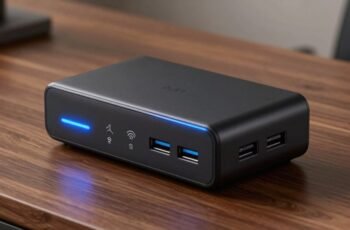
Understanding how long a 500Wh power station can sustain your devices requires analyzing multiple factors, including power consumption, efficiency, and environmental influences. While simple calculations provide a baseline, real-world performance often varies. To optimize its use during off-grid or emergency situations, we need to take into account these variables carefully. Let’s explore the mechanics behind this capacity and identify practical strategies to maximize runtime in different scenarios.
Key Takeaways
- Runtime depends on the connected device’s power consumption; higher wattage devices deplete the battery faster.
- Estimated duration: 500Wh divided by device wattage, adjusted for inverter efficiency and load surges.
- Continuous load reduces runtime proportionally; intermittent use extends overall battery life.
- Battery health, age, and environmental conditions can decrease actual runtime over time.
- Proper load management and prioritizing essential devices maximize usable runtime from the power station.
How Does a 500Wh Power Station Work?
A 500Wh power station operates by storing electrical energy in integrated batteries, which then supply power to connected devices through an inverter. The batteries, typically lithium-ion or lithium-polymer, hold a fixed capacity of 500 watt-hours, representing the total energy available. When a device is connected, the power station converts the stored DC (direct current) energy into AC (alternating current) via the inverter, making it compatible with most appliances. The system depends on electronic circuitry to regulate voltage, protect against overloads, and optimize energy transfer efficiency. As power is drawn, the battery’s charge depletes proportionally, and the inverter ensures a stable output. Overall, this setup facilitates portable, reliable power delivery, with performance directly linked to battery capacity and the efficiency of the conversion process.
Factors That Affect How Long It Lasts
The duration a 500Wh power station can provide energy depends on several key factors, primarily the power consumption of connected devices, the efficiency of the inverter, and the condition of the batteries. Higher device wattage reduces runtime, while inefficient inverters cause energy losses, shortening overall usage. Battery health influences capacity, with degraded batteries delivering less power. External conditions such as temperature can also impact performance. Additionally, usage patterns, such as continuous versus intermittent load, considerably affect longevity.
- Power draw of individual devices
- Inverter efficiency ratings
- Battery age and health
- Temperature and environmental conditions
- Load fluctuation and usage patterns
How to Calculate Device Power Consumption
To accurately calculate device power consumption, we start by understanding the power ratings typically listed in watts. Next, we determine the watt-hours required by multiplying the device’s power rating by its usage time. This allows us to estimate how long a device can run on a given power station capacity.
Understanding Power Ratings
Understanding power ratings is essential for accurately estimating how long a power station can run connected devices. Power ratings specify a device’s energy consumption, typically in watts (W) or milliwatts (mW), which directly impacts runtime calculations. To determine a device’s power consumption, consider these key points:
- Wattage (W): The primary measure of a device’s power draw.
- Voltage and current: Power (W) = Voltage (V) × Current (A).
- Peak vs. continuous power: Continuous ratings are crucial for sustained operation.
- Energy efficiency: Higher efficiency reduces actual power consumption.
- Standby power: Even idle devices consume power, affecting overall usage.
Accurate interpretation of these ratings enables precise calculations of device runtime on a given power capacity, ensuring ideal utilization of the power station.
Calculating Watt-Hours Needed
When calculating the watt-hours (Wh) a device consumes, we first need to determine its power draw in watts and the duration of use. Power draw is typically specified on the device label or in the user manual, expressed in watts (W). To find the total energy consumption, multiply this wattage by the number of hours the device operates: Wh = W × hours. This calculation provides a precise measure of energy required for a specific task, allowing us to assess whether a 500Wh power station can support the device. Accurate calculation depends on using the actual power rating and expected usage time, ensuring we match power station capacity with real-world energy demands. This method supports effective planning and efficient energy management.
Estimating Usage Duration
Estimating the usage duration of a device requires accurately determining its power consumption in watts, which involves examining its specifications or measuring its actual power draw with appropriate tools. To do this effectively:
- Check the device’s label or manual for wattage or amperage ratings
- Use a power meter to measure real-time power consumption
- Convert amperage to watts using voltage (Watts = Amps × Volts)
- Account for device efficiency and startup surges
- Consider the device’s duty cycle and operational conditions
Estimating Run Time for Common Devices
To accurately determine how long a 500Wh power station can run various devices, we need to analyze each device’s power consumption in watts and calculate the runtime accordingly. We start by identifying the device’s wattage, which indicates average power draw during operation. To estimate runtime, divide the power station’s capacity (Wh) by the device’s wattage. For example, a device consuming 50W would run approximately 10 hours (500Wh / 50W). Devices with higher wattage, such as a 100W laptop, will run around 5 hours, while lower wattage devices, like LED lights at 10W, could operate up to 50 hours. Precise calculations depend on actual device wattage and efficiency, but this method provides a solid baseline for estimating runtime.
Real-World Examples of Power Station Usage
Real-world applications of a 500Wh power station demonstrate its versatility across various scenarios. It efficiently supports essential devices, making it valuable in both emergency and everyday contexts. For example:
- Powering a portable refrigerator during camping trips
- Charging multiple smartphones simultaneously during outdoor events
- Running LED lighting systems in remote work sites
- Supporting medical devices in off-grid locations
- Supplying power to small tools for maintenance tasks
These examples highlight the station’s capacity to sustain devices with moderate power demands over practical periods. Its compact size and portability make it suitable for diverse environments, from outdoor adventures to emergency preparedness. Analyzing these real-world uses underscores the importance of understanding device consumption and station capacity for ideal performance.
Strategies to Maximize Your Power Station’s Duration
Maximizing the duration of your power station requires strategic management of both device selection and operational practices. Prioritizing energy-efficient devices minimizes power draw, extending runtime. Using devices with low standby power and optimizing usage patterns—such as turning off equipment when idle—reduces unnecessary consumption. Implementing load management, like staggering device operation, ensures the power station isn’t overwhelmed during peak load times. Additionally, monitoring real-time power usage helps identify inefficiencies. Maintaining the power station’s batteries within ideal charge ranges—avoiding deep discharges and overcharging—preserves capacity and prolongs lifespan. Employing external energy sources, like solar panels, can supplement stored energy, effectively increasing operational duration. These strategies collectively maximize power utilization, enabling longer operation periods from a limited 500Wh capacity, especially in critical or remote applications.
Limitations of a 500Wh Power Station
A 500Wh power station inherently has limited energy capacity, which constrains its total usable runtime. This shortens the duration of power supply, especially when powering multiple devices or high-consumption equipment. Understanding these limitations helps us set realistic expectations for its performance in various scenarios.
Limited Energy Capacity
How much energy can a 500Wh power station reliably deliver before depletion? Its limited capacity inherently restricts the total usable energy, impacting application scope. This constraint means it’s suitable for short-term, low-power needs, but not for extended or high-demand operations. Critical considerations include:
- Maximum simultaneous device load affecting runtime
- Energy buffer for unexpected power demands
- Battery degradation over repeated cycles reduces capacity
- Power management becomes essential to optimize usage
- Use-case limitations in outdoor or emergency scenarios
These factors highlight that, despite portability, a 500Wh station’s finite energy reserves limit its practicality for prolonged or high-energy tasks, emphasizing the importance of strategic power allocation.
Shorter Usage Duration
Why does a 500Wh power station typically offer only limited usage time? It primarily relates to its energy capacity relative to the power draw of connected devices. When devices consume electricity at a high rate, the available energy depletes quickly, resulting in shorter operation periods. For instance, a device drawing 50W will run approximately 10 hours, but doubling the consumption to 100W cuts that time in half. Additionally, the power station’s efficiency and conversion losses further reduce usable runtime. These factors mean that, despite portability, the station cannot sustain prolonged use of high-power equipment. Consequently, users must carefully consider device power requirements and operational duration when planning for extended or continuous power needs.
Comparing 500Wh Power Stations for Different Needs
Choosing the right 500Wh power station depends heavily on specific usage scenarios, as different needs demand varying levels of capacity and output. When comparing models, we consider factors like inverter power, recharge options, port selection, and weight-to-capacity ratio. These elements directly influence performance in diverse environments.
Selecting a 500Wh power station depends on your specific needs and environment.
- Inverter capacity determines the ability to power high-wattage devices.
- Recharge methods (solar, AC, DC) affect flexibility during extended use.
- Port variety impacts compatibility with multiple device types.
- Weight and portability influence ease of transport for outdoor applications.
- Battery management systems guarantee efficiency and longevity under different load conditions.
Analyzing these factors helps us select a power station optimized for specific needs, whether for camping, emergency backup, or professional use.
Tips for Planning When Off-Grid or During Emergencies
Effective planning is vital when operating off-grid or during emergencies, as it guarantees reliable power availability under unpredictable conditions. We recommend evaluating your energy needs precisely and prioritizing essential devices. To optimize resources, consider the following:
| Device Type | Power Consumption | Priority Level |
|---|---|---|
| Communication Gear | Low | High |
| Medical Equipment | Medium | High |
| Lighting | Low to Medium | Medium |
| Appliances | High | Low |
This table helps identify critical loads versus non-essential consumption. Regularly monitor your power station’s output, and maintain a contingency plan that includes backup charging methods. Precise load management and strategic prioritization ensure sustained operation during critical periods.
When to Upgrade or Expand Your Power Capacity
Monitoring your power usage patterns reveals when your current system no longer meets demand, signaling the need for an upgrade. Increased consumption, frequent discharges, or inability to support essential devices indicate capacity limits are being reached. Recognizing these signs allows for timely system expansion to maintain reliable power availability.
Signs You Need More Power
When your power station consistently struggles to meet your energy demands, it becomes a clear indicator that an upgrade or expansion is necessary. Recognizing these signs helps prevent system overloads and guarantees reliable power.
- Frequent depletion before the end of your usage window
- Inability to power all essential devices simultaneously
- Noticing voltage drops or power fluctuations
- Extended recharge times that hinder operational efficiency
- Increased reliance on supplementary power sources
These indicators point to insufficient capacity to support your current load. Monitoring your power consumption patterns and system performance metrics allows for precise assessment. Addressing these signs proactively minimizes downtime and enhances overall system stability, ensuring your power needs are consistently met without compromise.
When to Upgrade System Capacity
Determining the most suitable time to upgrade or expand your power capacity hinges on analyzing system performance data and usage patterns. If your power station frequently approaches its maximum capacity or if runtime consistently falls short of your needs, it’s a clear indicator that an upgrade is necessary. Monitoring energy consumption over time reveals whether current capacity supports your demands or if periods of overload occur. Additionally, increasing device load or new equipment installations can necessitate capacity expansion to maintain system stability. Technical thresholds, such as battery discharge rates and inverter limits, also guide upgrade timing. Proactive assessment ensures uninterrupted power supply and prevents system strain, helping us optimize performance and avoid potential failure due to capacity shortfalls.
Frequently Asked Questions
Can a 500WH Power Station Power a Refrigerator Overnight?
Yes, a 500Wh power station can typically run a refrigerator overnight, assuming the fridge consumes around 100-150W continuously; however, actual runtime varies with efficiency, startup surges, and the fridge’s specific power draw.
How Does Temperature Impact a Power Station’s Battery Life?
Extreme temperatures drastically reduce a power station’s battery life; high heat accelerates chemical degradation, while cold hampers chemical reactions, causing capacity loss. Maintaining ideal temperature guarantees maximum efficiency and longevity, critical for reliable, long-term power station performance.
Is It Safe to Leave a Power Station Plugged in Continuously?
It’s generally safe to leave a power station plugged in if it has built-in safeguards, but we recommend unplugging it after full charge to prevent potential overcharging, battery degradation, or safety risks, ensuring maximum longevity and performance.
What Maintenance Is Required for a 500WH Power Station?
We recommend regular maintenance, including checking for firmware updates, cleaning vents and contacts, inspecting for physical damage, and calibrating the battery periodically to guarantee peak performance and longevity of your 500Wh power station.
How Does Age Affect the Performance of a Power Station?
As a power station ages, we notice decreased battery capacity and efficiency due to chemical degradation and component wear, leading to reduced runtime and performance, underscoring the importance of regular maintenance and timely component replacements for ideal operation.
Conclusion
Ultimately, a 500Wh power station might seem like a reliable backup, but it’s a fragile lifeline—easily drained by a single high-watt device. While it’s perfect for small gadgets, it can’t sustain a home’s needs for long. So, as we watch it flicker and fade, it’s clear: in the sphere of emergency power, size still matters. Sometimes, the best backup is knowing when to upgrade before your devices leave you in the dark.