At the crossroads of energy solutions, choosing between a power station and a generator highlights the fundamental trade-offs in camping power needs. Each option symbolizes a different approach: one prioritizes sustainability and convenience, while the other emphasizes capacity and reliability. To make an informed decision, we must carefully evaluate factors like output, noise, portability, and environmental impact—details that can considerably influence your camping experience and equipment safety. The key questions remain: which choice aligns best with your specific requirements?
Key Takeaways
- Power stations are quieter, eco-friendly, and suitable for low to moderate power needs, ideal for short-term camping.
- Generators offer higher wattage and are better for high-demand, continuous power but are heavier and noisier.
- Power stations are lightweight, portable, and require no fuel, reducing environmental impact; generators need fuel refills and produce emissions.
- Cost-wise, power stations have higher upfront costs but lower operational expenses, while generators are cheaper initially but cost more in fuel and maintenance.
- Choose based on power requirement, portability, noise sensitivity, and environmental considerations for an optimal camping setup.
How Do Power Stations and Generators Differ for Camping?
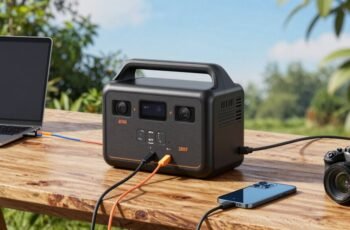
While both power stations and generators provide electricity for camping, they differ considerably in design and functionality. Power stations are compact, battery-powered devices featuring integrated inverters, multiple outlets, and digital displays for monitoring. They store energy internally and deliver clean, stable power suitable for sensitive electronics. In contrast, generators are mechanical devices that convert fuel into electrical energy via an engine-driven alternator. They produce alternating current directly and typically require fuel refills, making them heavier and noisier. Power stations are silent, low-maintenance, and ideal for portable, short-term use, whereas generators offer higher power outputs over extended periods but with increased operational complexity. These fundamental design distinctions influence their suitability for various camping scenarios, prioritizing either convenience or power capacity.
Which Factors Should Influence Your Choice Between a Power Station and a Generator?
When selecting between a power station and a generator, we must evaluate our specific power needs and intended usage to guarantee adequate capacity and efficiency. Portability and convenience also considerably influence the decision, as they determine ease of transport and setup in camping environments. By analyzing these factors, we can identify the solution that best aligns with our operational requirements and logistical constraints.
Power Needs and Usage
Determining whether a power station or a generator best suits your camping needs hinges primarily on your specific power requirements and usage patterns. For low to moderate power demands, such as charging devices or powering small appliances, a portable power station offers stable, quiet, and efficient energy with minimal fuel consumption. Conversely, high-demand applications—like running multiple appliances or heavy-duty equipment—may necessitate a generator capable of higher wattage output, albeit with increased noise and fuel consumption. We must consider whether continuous, steady power is essential or if intermittent, short-term usage suffices. Understanding your total wattage needs, the duration of power use, and the types of devices involved allows us to select the most appropriate power source, optimizing efficiency and operational reliability.
Portability and Convenience
The decision between a power station and a generator often hinges on their respective portability and convenience features, which directly impact ease of transport, setup, and daily use during camping trips. Power stations are typically compact, lightweight, and designed for quick deployment, making them ideal for frequent movement. Generators, however, can be bulkier and heavier, requiring more effort to transport and set up. When evaluating convenience, consider these factors:
- Weight and size for ease of carrying and storage
- Ease of refueling or recharging during extended trips
- Setup time needed to establish operational status
- Noise levels affecting campsite comfort and compliance
These elements are critical in choosing the most practical solution based on your camping style and logistical needs.
Pros and Cons of Using a Power Station for Camping Trips
We recognize that portability and ease of use are key advantages of power stations, making them convenient for camping. However, their power capacity can be limited, restricting the number of devices or appliances operated simultaneously. Evaluating these factors helps determine if a power station aligns with the specific energy demands of your trip.
Portability and Ease of Use
While power stations are generally designed for portability and ease of use, their practicality for camping depends on specific factors. First, weight impacts transportability; lighter models are more suitable for backpacking, while heavier units suit vehicle camping. Second, ergonomic design influences setup time and user comfort during deployment. Third, the inclusion of handles or wheels enhances mobility across uneven terrain. Fourth, interface simplicity—such as intuitive controls and straightforward port access—reduces operational complexity. The compact form factor facilitates storage and quick deployment, but may limit power output or port variety. Overall, power stations excel in ease of use due to minimal maintenance and straightforward operation, yet their effectiveness hinges on careful consideration of size, weight, and ergonomic features tailored to the camping context.
Power Capacity and Limitations
How well does a power station meet the energy demands of a typical camping trip? Power stations generally have sufficient capacity for essential devices such as lights, small appliances, and charging electronics. They often feature lithium-ion batteries with capacities ranging from 200Wh to 2000Wh, providing reliable energy for moderate usage. However, their limitations become evident when powering high-consumption equipment like portable refrigerators or power tools, which may exceed their maximum output or deplete the battery quickly. Additionally, prolonged use or multiple devices can strain the system, requiring careful monitoring of remaining capacity. While power stations excel in providing clean, quiet energy, their limitations in sheer capacity and rapid battery depletion restrict their ability to support extended, high-demand camping activities.
Benefits and Drawbacks of Choosing a Generator for Camping
Choosing a generator for camping offers several tangible benefits, especially reliable power supply and portability. Generators provide consistent electricity, essential for powering devices, lighting, and small appliances. Their mobility allows easy transport to remote locations. Key advantages include:
- Dependability: Generators operate independently of external power sources, ensuring continuous energy availability.
- High Power Output: They can deliver substantial wattage, suitable for multiple devices simultaneously.
- Versatility: Compatible with various fuel types, enabling adaptation to different environments.
- Rapid Deployment: Setup is quick, making them ideal for short-term or emergency use.
However, drawbacks include noise levels, fuel dependency, emissions, and maintenance needs. These factors must be balanced against their benefits for effective camping power solutions.
Comparing Power Output, Noise Levels, and Portability
When evaluating power sources for camping, understanding their output capacity, noise levels, and portability is essential. Power stations typically deliver stable, clean energy with consistent wattage output, often exceeding 200 watts, suitable for charging devices or powering small appliances. Generators, however, can produce considerably higher power levels—sometimes over 3000 watts—making them ideal for more demanding equipment. Noise levels differ markedly: power stations operate quietly within 40-60 decibels, whereas traditional generators can reach 70-80 decibels or higher, which may disturb the environment. Regarding portability, power stations are compact and lightweight, often weighing under 30 pounds, designed for easy transport. Generators tend to be bulkier and heavier, with some exceeding 100 pounds, requiring additional handling and storage considerations.
Which Is More Eco-Friendly: Power Station or Generator?
Although both power stations and generators serve to supply portable energy, their environmental impacts differ substantially. Power stations typically utilize rechargeable batteries, producing no direct emissions during operation, whereas generators rely on combustion of fossil fuels, releasing greenhouse gases and pollutants. The environmental advantages of power stations include:
- Zero emissions during use, reducing air pollution.
- Energy efficiency, with minimal waste heat.
- Lower noise levels, minimizing noise pollution.
- Reduced carbon footprint over time, especially with renewable charging sources.
Generators, on the other hand, emit carbon dioxide, nitrogen oxides, and particulate matter, contributing to climate change and air quality issues. While portable, they pose a greater environmental risk, making power stations the more eco-friendly choice for sustainable camping.
How Much Should You Budget for a Camping Power Solution?
Budgeting for a camping power solution requires careful consideration of the device’s capacity, features, and long-term operational costs. Power stations tend to have higher upfront costs, typically ranging from $300 to $1,500, depending on wattage and battery capacity. They offer silent operation and cleaner energy, justifying a higher initial investment for extended use. Generators generally cost between $200 and $1,000, with lower initial expense but higher ongoing fuel and maintenance costs. To determine an appropriate budget, we must analyze expected power demands, duration of usage, and efficiency requirements. A thorough budget balances initial purchase price with operational expenses, emphasizing the device’s ability to meet specific camping needs reliably. Accurate cost estimation ensures suitable investment aligned with both short-term needs and long-term sustainability.
Tips for Selecting the Best Power Station or Generator for Your Camping Needs
Choosing the right power station or generator for camping hinges on evaluating your specific energy needs and operational preferences. To make an informed decision, consider these factors:
- Power output: Match the device wattage requirements with the unit’s continuous power capacity to ensure reliable operation.
- Portability: Assess weight, size, and ease of transport, especially if frequent setup and teardown are involved.
- Fuel type and efficiency: Evaluate fuel availability, consumption rates, and environmental impact for sustained use.
- Noise levels: Opt for quieter units to minimize disturbance in the natural setting, particularly in shared or quiet camping areas.
Frequently Asked Questions
Can Both Power Stations and Generators Run All Camping Appliances?
Both power stations and generators can run most camping appliances, but power stations excel with sensitive electronics due to clean power output, while generators provide higher wattage for heavy-duty appliances; choose based on your specific power needs.
How Long Can a Power Station or Generator Operate Continuously?
We can operate a power station for up to 8-12 hours on a single charge, while generators run continuously until fuel depletes, typically lasting 8-24 hours depending on size and fuel consumption.
Are There Safety Concerns With Using Generators While Camping?
Yes, generators pose safety risks such as carbon monoxide poisoning, fire hazards, and noise pollution. We recommend proper ventilation, keeping them outdoors, using carbon monoxide detectors, and adhering to manufacturer safety guidelines to minimize these dangers.
Do Power Stations Require Regular Maintenance or Refueling?
Power stations generally require minimal maintenance and no refueling, as they’re battery-based systems. However, periodic checks of batteries, connections, and firmware updates are necessary to guarantee peak performance and longevity during camping trips.
Which Option Is Better for Long-Term Camping Trips?
Power stations are better for long-term camping trips due to their low maintenance, clean energy output, and portability. They require minimal refueling and offer reliable power, making them a practical and sustainable choice over traditional generators.
Conclusion
Ultimately, selecting the right power source transforms our camping experience from a static setup to a seamless adventure. Visualize the quiet hum of a power station keeping your devices charged amidst a serene forest, or the robust roar of a generator powering heavy equipment on a rugged trail. Our choice hinges on precise needs—balancing output, noise, eco-impact, and budget—to make certain we stay connected and powered, no matter where our journey takes us.